Showing posts with label Age of Reason. Show all posts

Tuesday, January 22, 2013

The Problem of Criminalizing Vice, Part I: America's War on Beer


Dear readers, I announced over a month ago that, on the occasion of the 79th anniversary on the end of Prohibition, I would write an article about its causes legacy. My original intent was to present some research involving alcohol consumption in the Middle Ages, but let's face it: if you're reading these words, you likely already know that the average medieval peasant drank a lot more alcohol than we do because it was safer than water. There's not much more to say about that, so allow me to tell you something you might not have known.

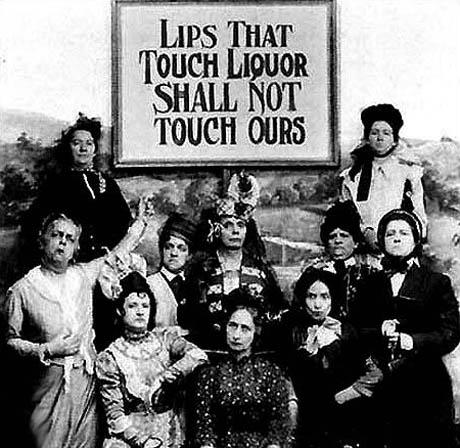
You might not have known that Prohibition was by no means the product of "backwards" religious extremists. On the contrary, the Volstead Act was entirely a product of the modern world. Certainly, evangelical Protestants championing the temperance movement were at the forefront of the war against booze. But their efforts would have amounted to nothing were it not for their alliance with social activist groups of every stripe in early 20th century American politics: no other cause could bring Protestant social reformers marching shoulder to shoulder with Catholics and Jews, whites with blacks, Democrats with Republicans, capitalists with communists, and Klansmen with suffragettes. Prohibition was a great experiment which pitted "the concerned" of every religious and political persuasion against the ignorant working class man who couldn't be trusted not to blow his paycheck at the bar rather than see to his wife and children. 

So what does this have to do with the Middle Ages? My "thesis" for this series, if you could call it that, is that the United States' grand experiment of alcohol Prohibition is a classic example of why criminalizing vice, merely because it is vice, is both anti-medieval and dangerous. Why does that matter? In short, because medievalism quite understandably attracts those who are sick of this world's rampant corruption, immorality, and lack of soul. They turn to the medieval ideals of kingship and order; a world where a man could be roasted alive for preaching a bad idea, and a rapist could be force-fed his own genitals. Surely, if Charlemagne were alive today, he would ban pot, Internet porn, condoms, and Muslim women from veiling in public.... right? Because as we all know, in a proper medieval Christian government, the king is God's lieutenant on earth, whose first responsibility is ensuring the salvation of his subjects' souls. Therefore, allowing any of his subjects to sin with impunity is to participate in sin itself.

A modified Charlemagne anti-sin bot: now with condom-zapping eye laser technology.
The truth of the matter is that only a modern American could dream up such a system. The average medieval king ruled over a decentralized government and had little power to control his subjects' personal lives, even if he wanted to. It certainly was a Christian king's responsibility to defend the Church, but they rarely had the luxury to play the idealist. Later on, we'll explore how the medieval world not only tolerated brothels, but rationalized their existence as necessary to prevent greater evils. For now, though, let's begin with more familiar ground and work backwards. Our story begins here in America with the causes that led to the noble cause of breaking our nation's addiction to Satan's brew: alcohol.


An Overview of America's War on Beer
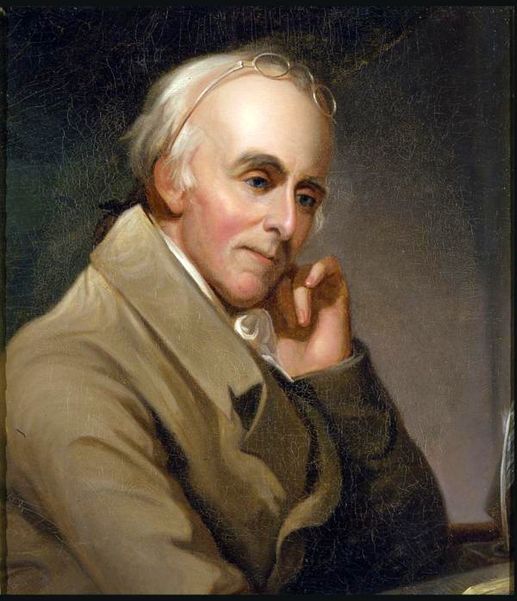
Prohibition wasn't the brainchild of a few early 20th century politicians out to score some votes from the "moral majority" crowd. Rather, it was the climax of a movement over a century in the making. Dr. Benjamin Rush, the famed Philadelphian physician and founding father, was an early and oft-cited influence upon the temperance activists. He published an Inquiry into the Effects of Ardent Spirits Upon the Human Body and Mind in 1785, which diagnosed alcohol as a substance prone to inducing both madness and acts of moral evil upon those who consume it. He lists some effects in his introduction:

"I shall begin by briefly describing their prompt or immediate effects, in a fit of drunkenness.

This odious disease (for by that name it should be called) appears with more or less of the following symptoms, and most commonly in the order in which I shall enumerate them.

1. Unusual garrulity.
2. Unusual silence.
3. Captiousness, and a disposition to quarrel.
4. Uncommon good humor, and an insipid simpering, or laugh.
5. Profane swearing and cursing.
6. A disclosure of their own or other people's secrets.
7. A rude disposition to tell those persons in company, whom they know, their faults.
8. Certain immodest actions. I am sorry to say this sign of the first stage of drunkenness sometimes appears in women, who, when sober are uniformly remarkable for chaste and decent manners.
9. A clipping of words. 
10. Fighting; a black eye, or a swelled nose, often mark this grade of drunkenness.
11 . Certain extravagant acts which indicate a temporary fit of madness. These are singing, hallooing, roaring, imitating the noises of brute animals, jumping, tearing off clothes, dancing naked, breaking glasses and china, and dashing other articles of household furniture upon the ground or floor."


We can forgive Dr. Rush for the errors of 18th century medicine, but the damage was done: the so-called Age of Reason, which (like our own generation) so highly valued any study christened in the name of science or medical progress, rubber-stamped its seal of approval on Dr. Rush's Inquiry. Four years later, a temperance organization of 200 Connecticut farmers came into existence. Virginia saw theirs in 1800, and New York's in 1808. 
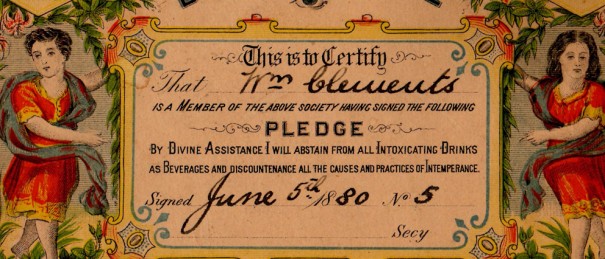
A teetotaler's certificate: because nothing in the Victorian era was official until you made a pledge on paper.
These early associations were motivated by the scientific community's diagnosis of alcohol as a poison, but it took a great awakening to supercharge the temperance movement into a formidable political force. The Second Great Awakening swept the country with a spirit of religious revival and moral reform, for which the temperance societies became a perfect vehicle to achieve their ends. Previously, temperance societies typically presented members with a pledge card holding two options: moderation in drink, or total abstinence. A member who signed on for T.A. (total abstinence) became known as a tee-totaler. But after the Great Awakening, moderation was increasingly viewed as a weak half-measure; and since Americans loathe half-measures, total abstinence became the only acceptable goal.
 
Thomas Welch made a fortune by changing the meaning of the Bible
See, in order for society as a whole to purge alcohol, the issue had to be freed from being the pet project of some health nuts (the equivalent of today's vegans or organic food advocates). It needed to be a matter of salvation or damnation. For the followers of these revival preachers, alcohol was not just poison: it was the devil's brew. Of course, reasons had to be manufactured to explain why Christ would turn water into wine for a party, or use wine to institute the Lord's Supper. It was convenient that around this time, Thomas Welch, a Methodist minister and dentist, found a way to mass-produce an unfermented, and therefore non-alcoholic "fruit of the vine": what we call grape juice. This feat of scientific engineering bizarrely enabled a very large part of Protestant America to substitute grape juice for wine in their services. Within a generation, their Biblical scholars claimed it was how Jesus did the Last Supper and the wedding at Cana all along.

The Civil War, as wars so often do, threw a wrench into the cogs of the temperance machine, but after the dust had settled, the prohibitionists returned with a vengeance. Kansas has the dubious distinction of being the first state in the Union to completely outlaw alcohol in its constitution (1881). Its chief enforcer: Carrie Nation, the mother-in-law from hell who barged into saloons and smashed their stock with her signature hatchet. Year by year, other states followed suit. North Dakota even entered the Union as a dry state. By the time Congress had passed the 18th Amendment, over half of all the states had already enacted statewide prohibition.

At the turn of the 20th century, both "science" and "religion" were firmly geared toward the prohibition of alcohol in America. It needed one final catalyst: social reform. The Enlightenment and the Great Awakening had already played their parts, but it was ultimately the Progressive Era that made prohibition a national mandate. The years between 1890 and 1930, emboldened by America's victory against Spain and the beginnings of empire, yearned for progress in every sector. It meant trustbusting Standard Oil and the robber barons of the old years. It meant destroying the old bosses and political machines of the past like Tammany Hall. It meant giving women the vote, and teaching eugenics to keep poor people from having too many children. And yes, it meant reforming the working man by destroying the alcohol industry. The working man had many enemies. The capitalist could afford to ban alcohol to keep his workers productive, while stockpiling alcohol before the beginning of enforcement for his own use. The communist could oppose alcohol because it was seen as a means for the capitalists to keep the proletariat down. The suffragette sought to destroy the saloon so that her husband would come home sooner with more money in his pocket. Her ally, the Klansman, targeted the saloon because it was a gathering place for Italians and Catholics. And yet, even many priests and bishops of the Catholic hierarchy were active members of the temperance movement.

America's entry into World War I provided the perfect excuse. In 1917, Congress passed the Food and Fuel Control Act, which banned the production of distilled spirits to conserve wheat for the war effort. The Conscription Act also forbade the sale of alcohol on or near military bases. Wartime necessity had conditioned the few last wet states and counties in the nation to total abstinence. Congress used the war to pass an amendment to ban the sale or manufacture of alcohol nationwide, pending its ratification by the states. By the time the needed majority from the state legislatures had come, the war was already over. On October 28, 1919, the Volstead Act was passed, providing the means to enforce Prohibition.


Stay tuned for the next issue, where we examine Prohibition's effects: organized crime, contempt for the law, and public enemies abound!


Tuesday, August 14, 2012

Merry Ole England Reborn, Part II: The Death and Return of King Arthur


(If you missed Part I, click here: The Revolution is Over.) 


The Death and Return of King Arthur


            Britain, once a powerhouse of the Enlightenment (home of such thinkers as Sir Isaac Newton, the economist Adam Smith, and the historian Edward Gibbon), acutely felt the excesses of the French Revolution. As France burned, nobles and Catholic priests fled the country, seeking refuge in the borders of their former enemy across the Channel. The beheaded king’s brother, Louis Stanislas, Count of Provence, spent several years living in exile in England. During these years, the Protestant English developed a grudging respect for the French clergy in exile, and even acknowledged the Roman Church’s proper place in France as a source of moral authority. Meanwhile, they grew a deeper appreciation for their own monarchy as a stabilizing force in the tumultuous world of politics. The time was ripe for the English to look into their hearts, and their own heritage; not at the ruins and verse of long-dead Greek civilizations, but in the works of their own medieval, Christian ancestors.

Napoleon’s defeat ushered the return of two kings, both issuing from Britain. The Count of Provence returned to France, after an extended stay in England, as King Louis XVIII. But more remarkably for us, in 1816 (a year after Waterloo), Sir Thomas Malory’s Le Morte d’Arthur was reprinted after having been out of publication and forgotten for nearly 200 years. When it first appeared in 1485, Le Morte was an anthology, like a “greatest hits” of the tales of King Arthur; from the founding of the Round Table, to Lancelot’s adultery with Guinevere, the tale of Tristan and Isolde, the quest for the Grail, and as the title suggests, Arthur’s death at the hand of his own son; all in one convenient package.

For us, Le Morte d’Arthur is the foundation of classic fantasy fiction. But for a firebrand Protestant of the Reformation, it was a pack of lies, superstition, and popery. Their descendants in the Age of Reason were likely to see it as either quaint or absurd as a Monty Python skit; in both cases, irrelevant to the pursuit of higher knowledge. Thus, it was consigned to the dustbin of history for a couple of centuries.
From Aubrey Beardsley's edition of Le Morte d'Arthur. Whoever said strange women laying in ponds, distributing swords is no basis for a system of government?

But with the rejection of the Age of Reason and neoclassicism, and the birth of a new Romantic movement, King Arthur would come to symbolize a nobler, purer, simpler Britannia. It hearkened back to an age when chivalry and courtly love were the order of the day, and the king was a pious Christian who personally vanquished evil with lance in hand, rump in the saddle. Of course, it was a bit awkward that the source material contained as much sex and betrayal as an HBO series. Furthermore, the author himself was a robber-knight, more at home in Game of Thrones than the Round Table. Malory wrote Le Morte from prison, where he was serving time for plundering abbeys and terrorizing monks with a small army, attempting to murder the Duke of Buckingham, possibly two counts of rape, and worst of all, fighting in the wrong side of the Wars of the Roses.

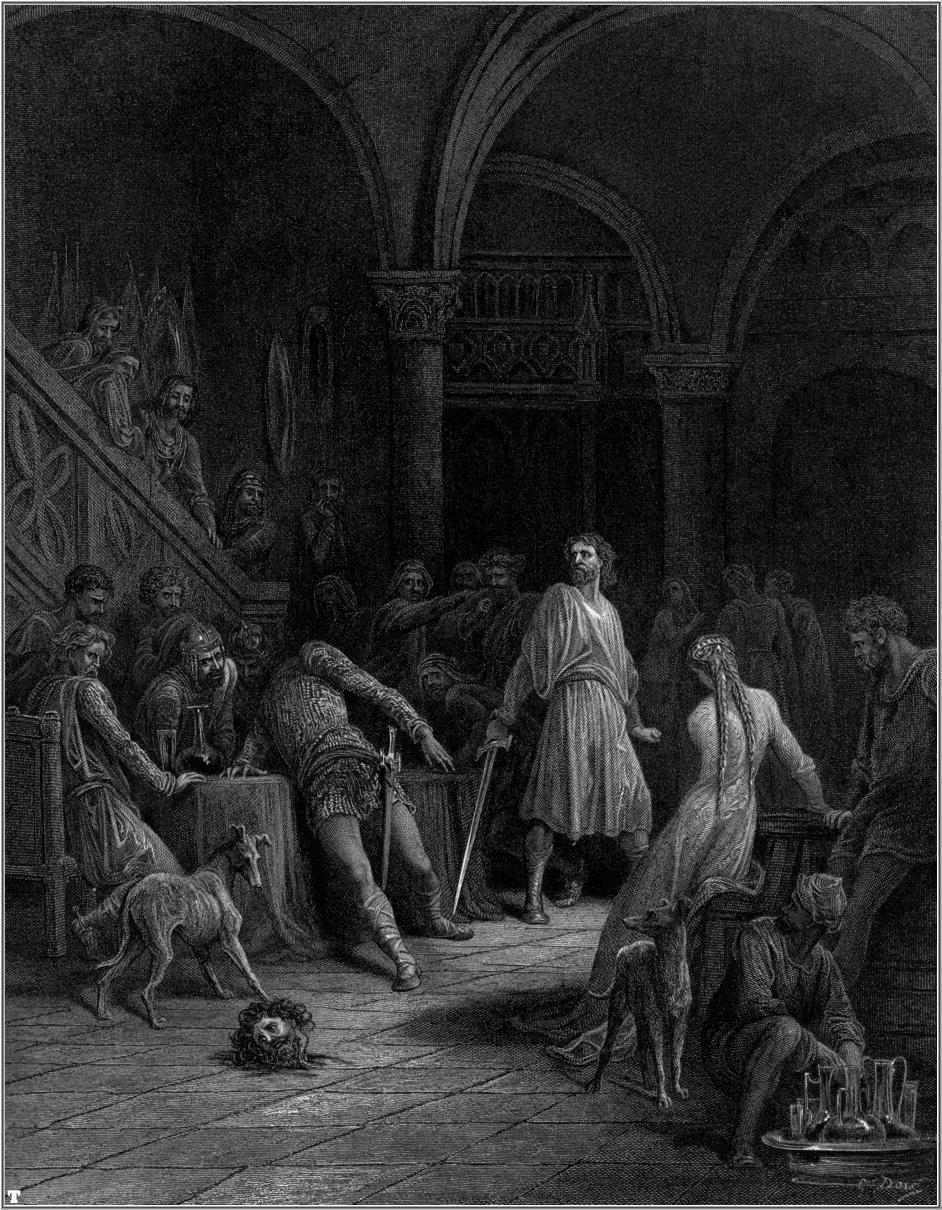
Nevertheless, Le Morte was an invaluable window into Britain’s Arthurian tradition, and the following years since its return saw authors adding, embellishing, or retelling the tales of mythic and medieval Britain with ever greater enthusiasm; the most famous being Alfred, Lord Tennyson’s The Lady of Shalott in 1832 and Idylls of the King in 1859. The latter, which sold 100,000 copies in its first week, reworked the Arthurian legends to suit the mores and needs of Victorian society. For instance, whereas the Malory version traced Arthur’s downfall to his son Mordred (born of an incestuous union with his half-sister, Morgause), Tennyson reworked the destruction of the Round Table to hinge largely on Guinevere’s adulterous affair with Lancelot. In Tennyson’s worldview, the fate of the kingdom was closely tied to the personal moral integrity of the queen. This is, of course, the ideal that Victorian Britons grew to project onto Queen Victoria herself, whether she wanted it or not.

Prince John: from champion of church reform to Disney villain.
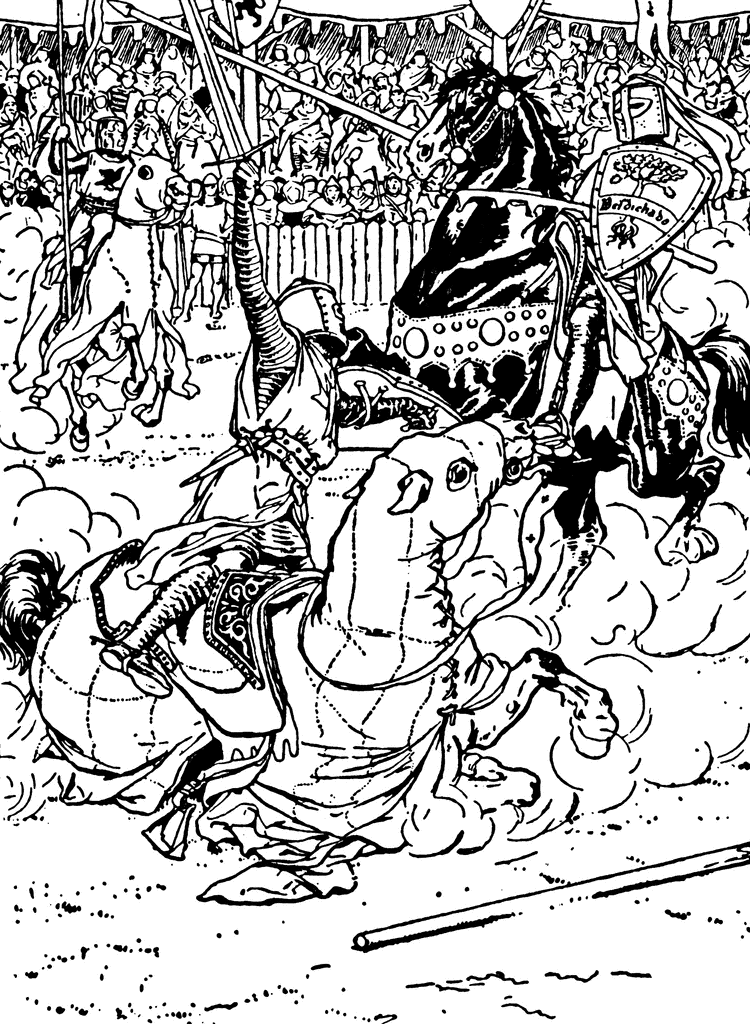
Meanwhile, other authors such as Sir Walter Scott tried their hands at retelling, or perhaps reinventing, the historical Middle Ages. The Age of Reason’s premier historian, Edward Gibbon, infamously dismissed the entire medieval period as “the triumph of barbarism and religion”. It was fashionable to cast the whole period as one dominated by Crusades, Inquisitions, witch-hunts, superstitions, and remarkable lack of hygiene; in short, a thousand-year nightmare in between the glories of the Roman Empire and the present, “civilized” era. Walter Scott turned this picture on its head with his novel Ivanhoe. Published in 1820, it tells of a knight in 12th-century England in the service of King Richard the Lionheart. There’s a crusade, a tournament, romance, Robin Hood, and evil Prince John mucking things up while Richard is away at war: all the ingredients to tell a good medieval adventure tale. John Cardinal Newman said that Scott, through Ivanhoe, “had first turned men's minds in the direction of the middle ages”. So profound was its influence that it’s hard to believe that before Ivanhoe made its way to bookshelves, Robin Hood robbed from the rich for himself rather than the poor, and King John was viewed as a proto-Protestant hero!

To be continued…


From Gustave Doré's illustrations of Idylls of the King.

A scene from Ivanhoe.

Monday, August 13, 2012

Merry Ole England Reborn, Part I: The Revolution is Over


Merry Ole England Reborn: How the Victorians Made the Middle Ages Cool Again

By J.T.M. Griffin


            Those of you who know me personally may know that I’m involved in several communities, including San Antonio Neo-Victorian Association, my city’s premier club for steampunks (Victorian science fiction enthusiasts… or, people who use Jules Verne as a pretext to wear top hats and brass goggles in public). “Why Victorians”, you ask? “Aren’t they the horribly repressed British people who invented ugly wallpaper, got horny over women’s ankles, and conquered all non-white people on earth?” 

            Well, yes. But as sci-fi fans, steampunks and neo-Victorians generally prefer to celebrate the ways in which the Victorians shaped the future. They think of steam engines, Darwin, Ford, Tesla, electric power, industry, progress, SCIENCE! Modern values, but of course, they were more stylish. What gets lost in the shuffle is how those same Victorians hated the change their new toys brought, with its newfangled smog, urban unrest, and wage slavery. They turned to the simplicity, chivalry, and splendor of the Middle Ages.

Queen Victoria and Prince Albert in an early example of Renaissance Faire chic, 1842.


The Revolution is Over


“You can take that liberty, equality, and brotherhood of yours and shove it up your arse.” –Arthur Wellesley, 1st Duke of Wellington (probably)

            Before we can examine the history of medieval revival, we have to look a bit further back into Europe's love of copying past styles. Before there was neo-medievalism, there was neoclassicism. It was the culmination of a style that began in the Renaissance's rediscovery of ancient Greece and Rome.

            Our story starts in 1814. Napoleon Bonaparte, dictator and Emperor of Revolutionary France, barely escaped from that catastrophe known as the invasion of Russia. Behind him laid a trail of 400,000 dead or missing French soldiers. With no troops to hold together an empire stretched thin, Napoleon’s old enemies licked their wounds, regrouped, and forced him to abdicate. 25 years of war, all thanks to a jailbreak, had finally come to a close. The French Revolution was over. Nobles and ambassadors of the European powers convened at the Congress of Vienna to decide how to restore order and powdered wigs. Kingdoms were repaired, borders redrawn, peace and conservatism reigned, and “mmm, yes…” punctuated the end of every other sentence. The ambassadors were so happy to have the old Europe back that even the Protestant kings were happy to put the Pope back in Rome (Pope Pius VII had effectively been held hostage by Napoleon in France for seven years). Most importantly, Great Britain finally vanquished its old rival, leaving it the sole superpower of the 19th century.

            So what went wrong? How did an honest plea for liberty, equality, and brotherhood devolve into looting churches, cutting people’s own employers’ heads off, and going to war with twelve countries at the same time? Europeans looked back at the past few hundred years of their history to find an answer. They saw that they, in their quest to understand the workings of the natural world, had reduced the idea of an intensely personal, self-sacrificing God to an absentee landlord. They had abandoned Christianity and chivalry in exchange for a new idol: Reason. But Reason demanded its own temples too, so they were built in accordance with slavish imitations of pagan Greek and Roman architecture (Washington, D.C. being the example par excellence). Slavery, after having been mostly abolished in the medieval world, was re-instituted. Those Greco-Roman temple knockoffs weren’t going to build themselves, after all; and since the Greeks and Romans had slaves, it must have been okay. Perhaps the worst enigma was that the movers and shakers of the Age of Reason made a great gab of the rights and dignity of Man, but they lost sight of men. Man became an abstract idea, to be celebrated in nude sculptures and constitutions. Men, though, were cogs in a machine that you could convince to take a musket and a uniform, stand in a line and die in a battlefield hundreds of miles from home in the name of “civil liberties”. God forbid those men would be more concerned about such trite matters as whether there would be a good harvest, or whether their wives would continue to give them lip in the afterlife. 

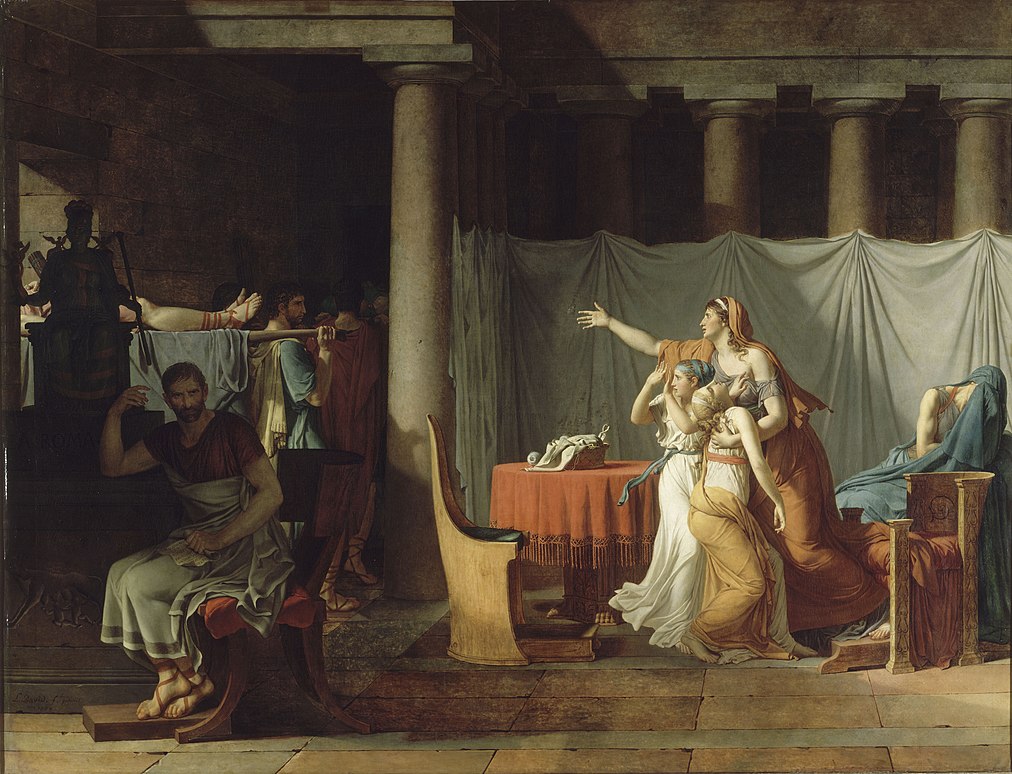
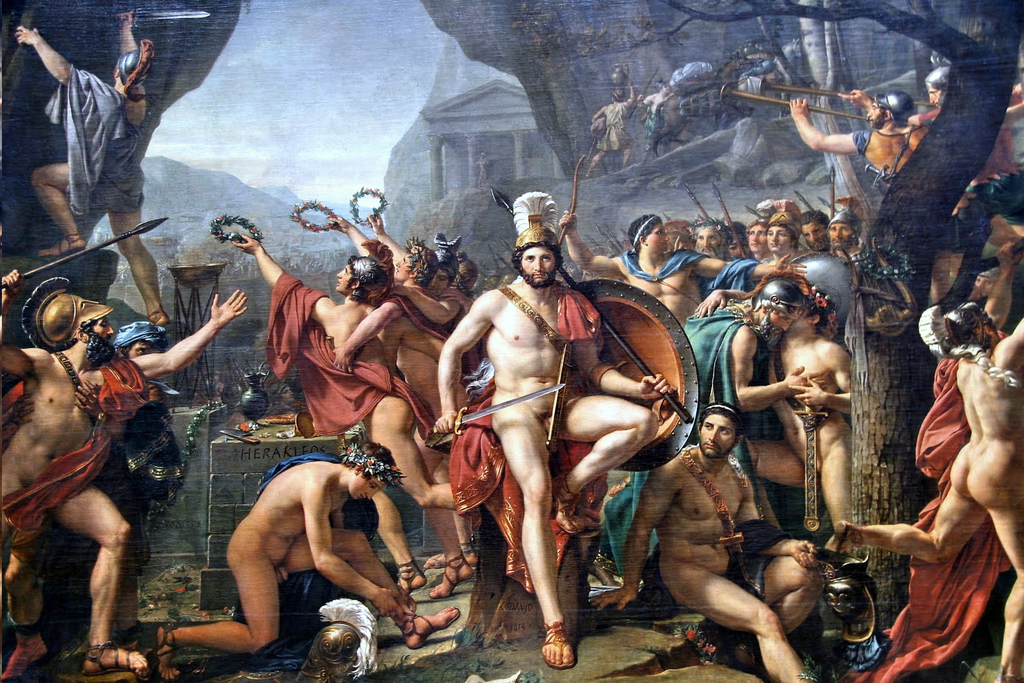
             Indeed, the Age of Reason and the French Revolution may have advanced their civil liberties, but only at the cost of their souls. For a people embroiled in decades of war and strife, the monumental paintings of Jacques-Louis David, with their hemlock-chugging philosophers, naked Spartans marching to the slaughter, and stern Roman fathers sending their sons to death for the virtues of the Republic, no longer swelled up feelings of patriotism and a desire to march and die for the mother country. They became, rather, cold reminders of the Reign of Terror: toga parties one day, mass executions the next. The virtues of pagan Greece and Rome were finally exposed as heartless and morally bankrupt. Neoclassicism simply had to die.

            It was thus under these conditions that the young Victorians would turn to the myth and mystery of their Christian ancestors, from whom the Enlightenment philosophers casually dismissed as the “dark ages”, for inspiration in an increasingly unstable world. 


The Lictors Bring to Brutus the Bodies of His Sons, by Jacques-Louis David, 1789. Shrouded in darkness, the founder of the Roman Republic sentences his sons to death for the sin of fighting for the monarchy, and doesn't look back.

Leonidas at Thermopylae, also by David, 1814. Naked Greek men brandishing swords were a favorite subject for the neoclassicsts.
The Death of Marat, again by David, 1793. Jean-Paul Marat, a leader of the French Revolution, is portrayed a martyr, stabbed to death in his bath, resting like Christ in the tomb. All signs of his paranoid, psychopathic tendencies are conveniently wiped away.
Out with the corsets and hoop skirts, in with the frat parties!