Sunday, August 4, 2013

God's Advocates: The Ascent of the Dominican Order

As some of you may know, I didn't get accepted to graduate school, so I'm contemplating a change of career. But in all the confusion, I forgot to share with you one of my writing samples, an essay on the history of the Dominican Order. It was one of several topics I had to choose from for a midterm paper for a particular class, and I could only cite from a preset list of sources. So if that's why I neglected to cite from your favorite seminal work on the Order, now you know. Enjoy!

Update: a few minutes after I posted this, a friend of mine remarked, "just in time for the feast of St. Dominic". Lo and behold, I check and find out out that today, in the pre-Vatican II calendar, is indeed the feast day of Saint Dominic. I have to confess that apart from my chosen patrons, I don't really keep on top of saints' days so there is no way I posted this essay on purpose, even subconsciously. Truly, I just couldn't think of anything better to post today. This is either providential or extremely coincidental.


God’s Advocates: The Ascent of the Dominican Order


            On the eve of the 13th century, it seemed that Christendom was a house divided against itself.  The eastern churches had already long since severed communion with Rome.  Meanwhile, the flames of Cathar heresy were spreading across southern France, the so-called eldest daughter of the Church, with alarming speed.  The classic monastic orders were accused of standing idly in solitude as their communities were falling into the hands of heretics, living in violation of their vows of poverty and chastity, or both.  Who, in those turbulent times, would stand in defense of the Catholic Church against the teachings of the Cathars and those others who accused the Church of straying from the gospel’s narrow path?  Among these few, Dominic of Osma and his Order of Preachers arose to take up the cause of orthodoxy.  The Dominican friars would go on to enjoy great prestige in the urban and intellectual life of Europe for the rest of the medieval era.  This essay will examine the personal experiences of the Order’s founder, a treatise by a Dominican Master on the formation of Preachers, and other accounts of the Order’s activities to demonstrate why the Dominicans were one of the most popular and successful orders of the age: because they were the most adept of all the religious orders at fulfilling the Church’s need for educated, articulate defenders.  Unlike the cloistered monks, the Dominicans actively engaged the laypeople of the cities throughout western Europe, bringing the message of the established Church to them in a way they could understand.

Saint Dominic as painted by Fra Angelico, also a Dominican

            The Order’s roots begin with its namesake, Dominic of Osma, then a humble religious priest.  In 1205, he accompanied the bishop of Osma to visit Pope Innocent III in Rome.  Along the way, the two journeyed through southern France, the stronghold of the Cathar sect.  There, they met the Cistercian legates sent by the Pope to dispel the heresy and diagnosed just why the Cathars were so successful in leading the people of the region astray: “its clergy had grown amoral and overrich.  And they told the pope that ‘in order to shut the mouths of the wicked, the clergy must follow the Divine Master’s example in the way they acted and the way they taught, stand humbly in the sight of God, go on foot, spurn gold and silver; in short, they must imitate the Apostles’ way of life in everything they did.’”[1]
            The clergy, in short, had grown lax with centuries of privilege and patronage.  Their demands for alms and obedience fell on deaf ears when they were put in competition with the “perfect” of the Cathars: the purest of the sect’s ranks, who refused money and possessions, abstained completely from sex, and subsisted on a very strict diet.  While those rules may not seem different from the vows which professed monks must observe, the Cathars taught a radically different doctrine.  Like the Manicheans a millennium before, the Cathars preached a dualistic reality where a God of light and a God of darkness were equally matched in a great battle for the fate of the world.  Where the Catholic God was the creator of all material things, the Cathar was expected to shun them because they were a product of the evil deity.  The inherent evil of possessions gave the Cathar “perfect” a special incentive to live out the ascetic ideal; in doing so, their example put the Catholic clergy, even the most strictly observant religious of their time, to shame.  The “perfect”, furthermore, gave their weaker brethren only one condition for achieving salvation: “all they needed to do, in order to impregnate them with the coveted Spirit, was to stretch out their hands over them before they died.”[2]  It was a lot less to ask for than the Catholic clergy, who expected alms, penances, pilgrimages, and confession to men far less impressive than the Cathar leaders.
Left: Pope Innocent III excommunicating the Cathars (also called Albigensians). Right: The Albigensian Crusade.
            A call to the true spirit of poverty, then, was the prescription which Dominic brought to his pontiff in Rome.  Innocent gave Dominic his blessing and sent him back to the Cathar lands.  The people of Languedoc saw Dominic and his bishop return on foot, clad in simple garb, as poor as their opposition.  The two sides engaged in one dispute after another, but victory for the Cathars would not come so easily this time, for Dominic was a man of letters.  He knew Occitan, the language of the region.  He carefully prepared his arguments ahead of time, in writing.  In the “tournaments” arranged by the nobles and townsmen, he matched the Cathars’ objections point by point, and in the eyes of his judges, stood victorious.  This initial victory, won through the double-edged sword of poverty and reason, would shape the methods of Dominic’s followers for centuries to come.[3] 
            Dominic cemented his work in Languedoc by founding a convent adhering to the strict rule of St. Augustine, competing directly with the Cathar houses for women.  From there, he attended the Fourth Lateran Council which, despite its attempts to reign in the creation of new religious orders, authorized him to form the Order of Preachers.  The Dominican friars were a new force to be reckoned with: they did not seclude themselves behind walls, but worked in the towns and freely mingled with the laity.  Their rule, based on that of Augustine, stipulated, “We shall receive no property nor income of any kind.”[4]  It was a stark departure from the way monasteries supported themselves, which typically involved the collecting of tithes from tenants on their lands, just as feudal lords did.  The Dominicans’ rule even dispensed them from praying the hours of the Divine Office, which all other religious were obliged to observe, when they had a mission to perform among the people. 
The very name of the Order says much about their cause: to win the hearts and minds of the laity through the use of argument.  Humbert of Romans, fifth Master of the Order, penned a manual “On the Formation of Preachers” which illustrates how a friar would translate his method of argumentation from the university lecture hall to the pulpit.
Now there are some preachers whose preparatory study is either all devoted to subtleties... or, at other times, it is exclusively devoted to looking for novelties, their intention, like that of the Athenians, being always to find something new to say... But a good preacher's concern is rather to study what is useful.[5]
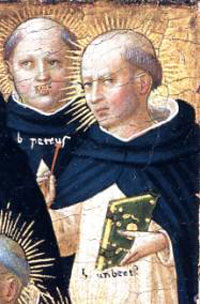
           
Humbert of Romans, fifth Master of the Order
Humbert repeatedly warns the aspiring preacher against overburdening his argument, whether it is by citing an endless list of authorities, citing multiple sources which all say the same thing, or ascribing too many meanings to a single word.  These faults are not likely to be committed by a simple-minded priest who has only a cursory knowledge of Scripture and no exposure to the early Fathers.  They are cautions for friars who were formed in the Dominican intellectual tradition, disputed theology in Dominican centers like the University of Paris, and were armed with the maxims of their intellectual heavyweights such as Albertus Magnus or Thomas Aquinas.  All the weapons of scholasticism would be useless if they all reached over the heads of an ordinary audience.  Humbert says, “A short act of worship encourages devotion, but one that is too long just sends people to sleep.  So concise preaching is useful, but it becomes useless if it goes on too long.”  He then goes on to warn the preacher of using one tactic exclusively, whether it is an argument, an anecdote, or an authority.  It is better to make moderate use of all three at once, then “The hook of preaching has a strong triple line attached to it, and that is a line which no fish can easily break.”[6]  Humbert’s language reminds his reader that the friar, for all his erudition, must stay true to what the gospel calls him to be: a fisher of men.
            All the Order’s talent still would not have assured their preeminence in the life of Christendom if it were not for the support they enjoyed from Rome.  Pope Innocent’s entire legacy was based on the assertion of papal primacy.[7]  To assert his influence over the kings of Europe, he first had to establish firm control over the bishops.  Powerful though the papacy was, it was still a tall order in a world of decentralized authority, where bishops reigned supreme within their dioceses.  The Lateran Council charged bishops with the duty of stamping out heresy by any means necessary, and threatened those who failed to contain the threat with deposition.[8] 
However, a more reliable solution for the Pope was to sidestep the bishops entirely.  The Dominicans, among other mendicant orders, were exempt from the local bishop’s authority in a number of ways.  The Council, for instance, forbade anyone “without the authority of the Apostolic See or of the Catholic bishop of the locality” from preaching, whether publicly or privately, under pain of excommunication.[9]  Even a priest in good standing could not simply go to the next town and preach without that bishop’s permission.  The Dominicans, to the contrary, held Rome’s trust and were authorized to go preach wherever they desired.  With no restrictions on where they could work or build monasteries, the Dominicans established themselves all over Europe, especially at intellectual centers from Bologna, to Montpellier (in the heart of the formerly Cathar stronghold in Languedoc), to as far as Oxford, where they were nicknamed the Blackfriars after their distinctive black cloaks.[10]  The papacy, in turn, used its close relationship with the Order to tighten its hold on the universities.  With loyal Dominicans at the forefront of so many schools, the papacy could ensure the dissemination of orthodox teaching everywhere; under the Order’s auspices, Catharism was doomed to extinction.
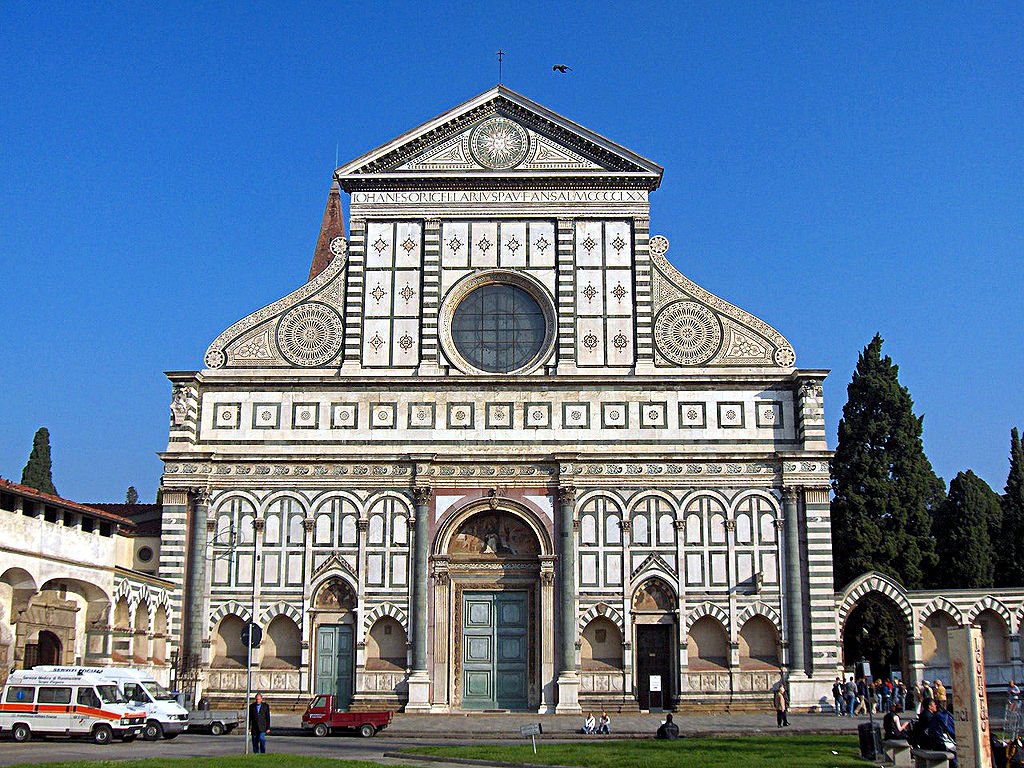
Santa Maria Novella, the chief Dominican church in Florence
Dominicans continued to play a large part in the history of the Church long after the Cathars had been eradicated.  If the Renaissance first emerged from the city of Florence in the course of the 14th century, the Blackfriars can proudly claim to have been among its architects.  Gene Brucker asserts that the Dominicans were “the most active and distinguished” religious order of that era.[11]  Where other orders in the city, such as the Camaldolese, suffered from poor education, family allegiances, and moral laxity, the popes could rely on the Dominicans to produce capable administrators and irreproachable spiritual leaders.  From Florence alone, the Order could boast of one canonized saint and three blesseds, including the renowned artist Fra Angelico.  Brucker adds, “A more significant index of distinction is the number of Florentine Dominicans who became bishops.  Twelve held sees between 1360 and 1430, and another (Leonardo Dati) was elected general of the order.”[12]  The most remarkable of these prelates was Fra Antonino Pieruzzi, elevated to the Archbishop of Florence’s throne in 1446.  A man of education and piety, he demanded that the priests of his diocese actually carry out their spiritual responsibilities.  When words failed, he had no qualms with imprisoning or even torturing priests who were lax in their duties.  At the same time, Antonino was not unbending to the realities of his city: merchants were children of God just as much as knights and peasants, and they could carry out their trade honorably.  “Just prices” were subject to the unseen forces of the market.[13]  He was later to be proclaimed a saint.
From the Order’s humble origins under Dominic to the flowering of the Renaissance in Italy, the Dominicans’ dual application of education and poverty gave them the edge needed to win the respect of both the Church’s hierarchy and the faithful at large.  Like the Jesuits of the Counter Reformation period, the Dominicans of the Middle Ages served as the Pope’s own shock troops in a war against heresy.  They produced a legion of saints and achieved a foothold in institutions of higher learning across the Catholic world and defined its mode of thought for centuries to come.  Nowhere is their legacy more felt than in the canonization of Thomas Aquinas and his Summa Theologiae as the definitive treatise on Catholic theology.  When the Council of Trent was finally convened to answer the challenges of Protestantism, two books were laid upon the altar: the Bible, and the Summa.  Surely, no Dominican could ask for a greater proof of his order’s contribution to the intellectual treasury of his church.


Works Cited
Brucker, Gene A.  Renaissance Florence.  New York: John Wiley & Sons, 1969.
Duby, Georges.  The Age of the Cathedrals: Art and Society, 980-1420.  Translated by Eleanor
Levieux and Barbara Thompson.  Chicago: University of Chicago Press, 1981.
Hollister, C. Warren, Joe W. Leedom, Marc A. Meyer, and David S. Spear, ed.  Medieval
Europe: A Short Sourcebook, Fourth Edition.  McGraw-Hill Humanities: 2001.


[1] Georges Duby, The Age of the Cathedrals: Art and Society, 980-1420, trans. Eleanor Levieux and Barbara Thompson (Chicago, University of Chicago Press, 1981), 139.
[2] Ibid., 133.
[3] Ibid., 139.
[4] Ibid., 140.
[5] Humbert of Romans, “On the Formation of Preachers,” in Medieval Europe: A Short Sourcebook, Fourth Edition, ed. C. Warren Hollister et al. (McGraw-Hill Humanities, 2001), 247.
[6] Ibid.
[7] Duby, 137.
[8] “A Canon from the Fourth Lateran Council”, in Medieval Europe: A Short Sourcebook, 255.
[9] Ibid.
[10] Duby, 141.
[11] Gene A. Brucker, Renaissance Florence (New York: John Wiley & Sons, 1969), 199.
[12] Ibid.
[13] Ibid., 201.

Saturday, August 3, 2013

Photo Tour of Famous Dead Folks at Westminster Abbey

I've joked before about how the New Liturgical Movement site should declare itself defunct and go into archive mode until the next pontificate, but they did recently post a small gem in the midst of all the recent darkness: some photos of a Requiem low Mass at the shrine of Saint Edward the Confessor in Westminster Abbey. Strange how it's easier to get celebrate a traditional-rite Mass in a church owned by an Anglican/Protestant sect than it is to celebrate one in many actual Roman Catholic sites...


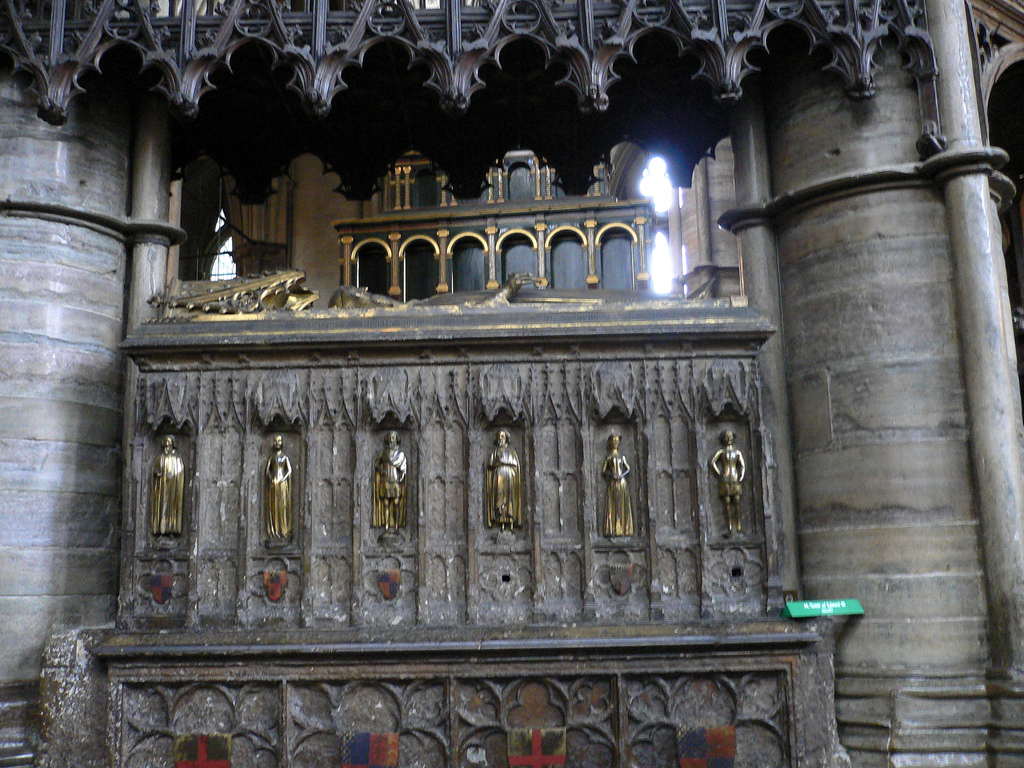
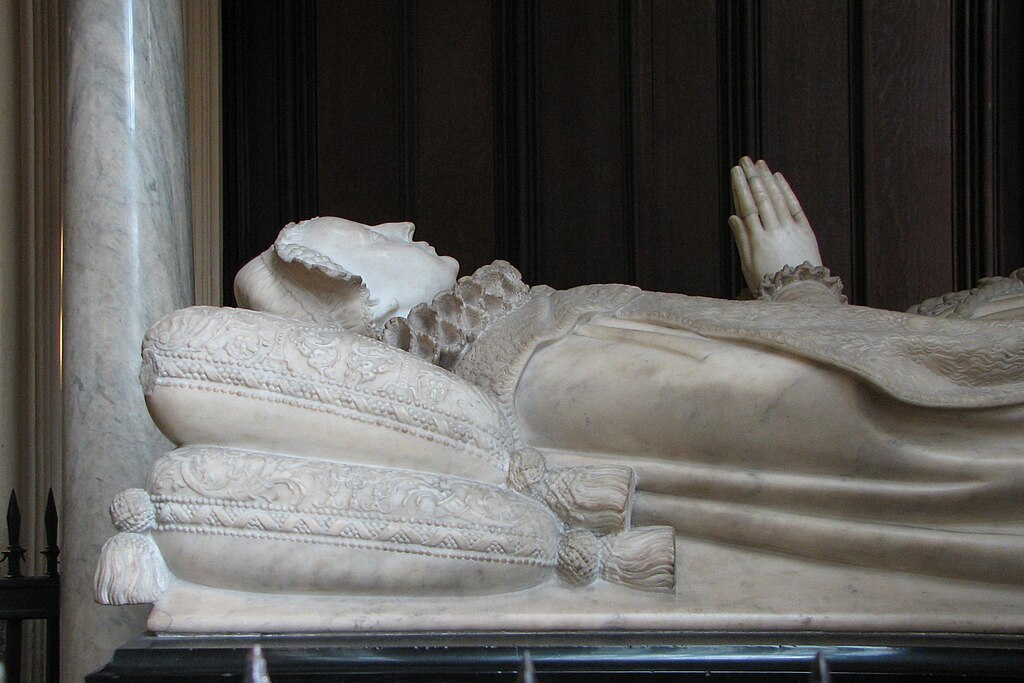
Today, Edward the Confessor is an obscure saint whose following is probably limited to a handful of eccentric Anglo-Catholics who revel in the Englishness of it all (if you want to create an awkward series of stutters, ask one to name three things Edward actually did in his lifetime). But before the royal wedding bonanzas, before the Abbey was packed to capacity with the corpses of famous dead Englishmen, and before the Crusades imported a Greek martyr named George as the realm's new patron saint, the Abbey's claim to fame was in housing the earthly remains of the penultimate Saxon king (as you see in the image above). After all, that was why Edward had it built in the first place.


A Brief History of How Westminster Abbey Became the Mausoleum It Is Today

In truth, Edward was never a popular saint outside of the realm's aristocratic circles. He was, in some ways, the opposite of Thomas Becket: a man of relatively humble origin who defied a king, paid the price in blood, whose cult among the masses grew overnight and was canonized in only three years. Edward died peacefully in his bed after a mostly uneventful reign. His true legacy began in the Abbey, the year after his death, when William of Normandy (called "the Bastard" in his day but known as "the Conqueror" by history) vanquished Harold Godwinson's forces and was crowned in the Abbey before Edward's remains. William was a foreigner ruling over a disaffected Saxon land, so to win his subjects' hearts and minds, he needed a symbol of unity. He capitalized on the suggestions that Edward was a Normanophile: he did, after all, build the Abbey in the Norman Romanesque style, the first of its kind to be seen in all of England. This was supplemented by the rumors that Edward relied on the advice of Norman courtiers and favorites, such as Robert, archbishop of Canterbury. And of course, the greatest rumor of all was that Edward had pledged the throne to William. We will probably never know the truth.

Edward's path to canonization was fraught by lack of claims to his sanctity and lackluster support by the commons and even the clergy. At last, nearly a century later, King Henry II could call in a favor after he helped secure Pope Alexander III's claim to the chair of Peter (which was precarious after the conclave of 1159). The thankful pontiff granted the English church's request, and Edward was canonized with the title of "the Confessor" in 1161. 

The first king to truly have a devotion to Edward the Confessor was Henry III. Perhaps he looked to Saint Edward as a father figure because Henry had to assume the throne at only nine years old; and even before then, his father King John wasn't much to speak of. It was Henry III who had the Abbey rebuilt in the Gothic style we know and love today, and revamped the saint's shrine to how it appears now. He also took to wearing plain clothing as Edward was thought to have done, had a mural of the saint painted in his bedroom, and even named his first son Edward (unusual at that time, as Edward was a Saxon name. That son was the same to be called "Longshanks" and immortalized in a certain Mel Gibson film later in history.)
Now, I told you about Henry III because he was the first king (besides Edward the Confessor, obviously) to be buried in Westminster Abbey, in 1272. Before then, the Norman kings generally followed one of two paths: if they died nobly, they were buried in splendor somewhere in Norman-occupied France. If they died in disgrace (or, say, in a hunting accident like William II), they were hastily tossed in the nearest abbey crypt to whatever English hellhole they were unlucky enough to croak in. Henry was the first to be buried anywhere near the capital, and probably the first to actually want to be buried anywhere in England. Therefore, it was he who created the legacy of Westminster Abbey as the burial hall of kings.


A few of the royal tombs

When I visited the Abbey, I had the pleasure of walking through the church with an audioguide narrated by Jeremy Irons; the only time I had ever preferred the audioguide to a real person. Reader, you'll have to make do with photos I've found on the Internet.

The tomb of Henry III (d. 1272), the first royal burial in the Abbey

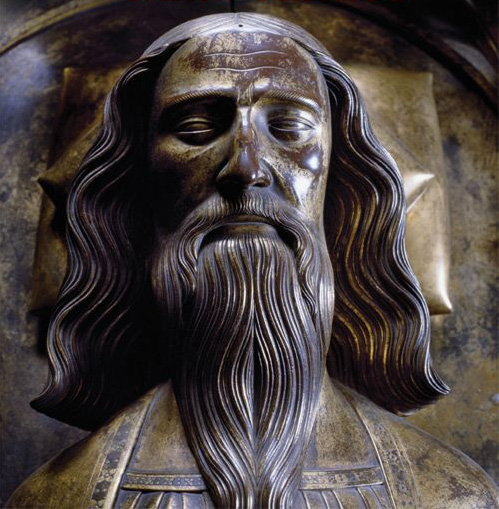
Henry III's effigy, above the tomb

Tomb of Edward III (d. 1377), who started the Hundred Years' War

Edward III again. From this angle, he looks like a Numenorean from the Tolkienverse, as imagined by an art deco sculptor in the Falloutverse.


Tomb of Henry V (d. 1422), who if the English are to be believed, won the Battle of Agincourt with two archers and a cheese knife. Inscription: "Henry V, hammer of the Gauls, lies here. Henry was put in the urn 1422. Virtue conquers all. The fair Catherine finally joined her husband 1437. Flee idleness"

Remains of what are believed to have been the "princes in the Tower". The Latin inscription says: “Here lie the relics of Edward V, King of England, and Richard, Duke of York. These brothers being confined in the Tower of London, and there stifled with pillows, were privately and meanly buried, by the order of their perfidious uncle Richard the Usurper; whose bones, long enquired after and wished for, after 191 years in the rubbish of the stairs (those lately leading to the Chapel of the White Tower) were on the 17th day of July 1674, by undoubted proofs discovered, being buried deep in that place. Charles II, a most compassionate prince, pitying their severe fate, ordered these unhappy Princes to be laid amongst the monuments of their predecessors, 1678, in the 30th year of his reign”.

Tomb of Henry VII (d. 1509) and Elizabeth of York. Aside from ending the Wars of the Roses and founding the Tudor dynasty, he's best known for dying filthy rich, hence the grandeur of his tomb. Inscription reads: “Here is situated Henry VII, the glory of all the kings who lived in his time by reason of his intellect, his riches, and the fame of his exploits, to which were added the gifts of bountiful nature, a distinguished brow, an august face, an heroic stature. Joined to him his sweet wife was very pretty, chaste and fruitful. They were parents happy in their offspring, to whom, land of England, you owe Henry VIII”

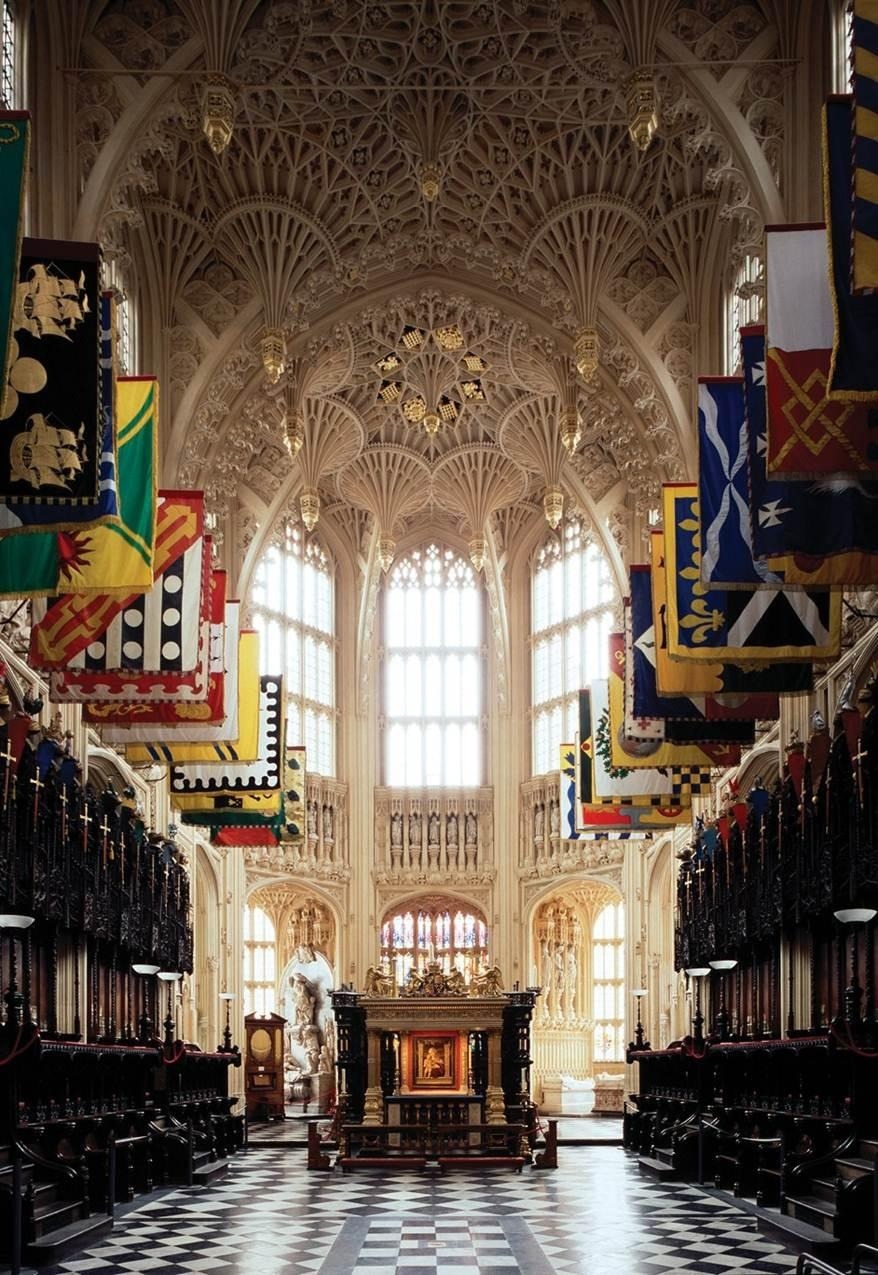
Henry VII's tomb in the midst of the Lady chapel (in the apse of the church). It was the first tomb in the Abbey to be made in the sumptuous Italianate Renaissance style. The sculptor, Torrigiano, was a Florentine who was responsible for giving Michelangelo his broken nose, thanks to a fistfight between the two.


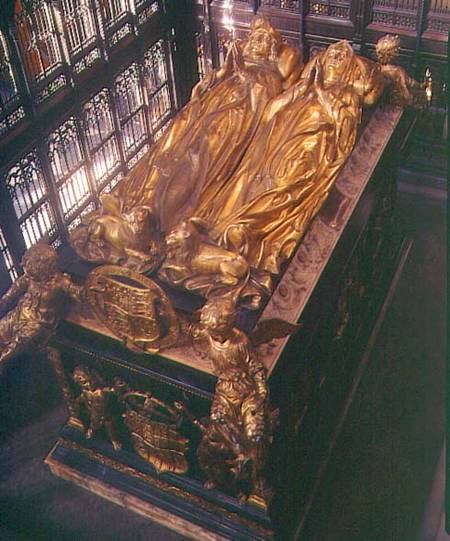
Tomb of Mary I (d. 1558) and Elizabeth I (d. 1603). The monument is all for Elizabeth, who is buried atop her sister, but an inscription acknowledging the two reads: "Partners in throne and grave, here we sleep, Elizabeth and Mary, sisters, in hope of the Resurrection."

Liz's effigy. She has additional inscriptions:
"Sacred to memory: Religion to its primitive purity restored, peace settled, money restored to its just value, domestic rebellion quelled, France relieved when involved with intestine divisions; the Netherlands supported; the Spanish Armada vanquished; Ireland almost lost by rebels, eased by routing the Spaniard; the revenues of both universities much enlarged by a Law of Provisions; and lastly, all England enriched. Elizabeth, a most prudent governor 45 years, a victorious and triumphant Queen, most strictly religious, most happy, by a calm and resigned death at her 70th year left her mortal remains, till by Christ's Word they shall rise to immortality, to be deposited in the Church, by her established and lastly founded. She died the 24th of March, Anno 1602 [NB: this is in the Julian calendar], of her reign the 45th year, of her age the 70th.
To the eternal memory of Elizabeth queen of England, France and Ireland, daughter of King Henry VIII, grand-daughter of King Henry VII, great-grand-daughter to King Edward IV. Mother of her country, a nursing-mother to religion and all liberal sciences, skilled in many languages, adorned with excellent endowments both of body and mind, and excellent for princely virtues beyond her sex. James, king of Great Britain, France and Ireland, hath devoutly and justly erected this monument to her whose virtues and kingdoms he inherits"

In short, the plot to the Elizabeth movies.

Tomb of Mary, Queen of Scots (d. 1587, commonly confused with Elizabeth's sister, Mary Tudor). Though she was executed by Liz, she has a tomb in Westminster Abbey opposite Elizabeth's chapel because her son became the next king, James I. Her inscription is perhaps the longest in the entire Abbey, so I just link it here.

Though my namesake put up several marvelous monuments for his predecessors, people actually forgot where James himself was buried for a couple centuries. 19th century historians dug up several of the graves, including Mary's, until they finally found him in the vault under Henry VII's tomb.

The last king to be buried was George II in 1760. After that, the Abbey caretakers apparently decided enough was enough. Successive kings have usually been around in or around Saint George's Chapel, Windsor Castle.


A few other famous personages

Geoffrey Chaucer (d. 1400). He was originally buried at the Abbey because he was a minister to the government, not a celebrated writer. It was only later that a tradition developed of burying other writers near him in what is now called Poets' Corner. Inscription: “Of old the bard who struck the noblest strains/Great Geoffrey Chaucer, now this tomb retains./If for the period of his life you call,/the signs are under that will note you all."


George Frederic Handel (d. 1759).


The entire floor is covered with tombs and memorial plaques. Dickens requested a small funeral, so this is all that marks him.

This one is built against the choir screen here, which is sort of like a rood screen or sanctuary gate. On the left is one to Sir Isaac Newton. I believe the Gothic revival screen was added by Edward Blore in the Victorian age. The dude on the right, by the way, is James Stanhope, who was sort of a prime minister under George I before that office formally existed.

Another favorite monument, and the most metal of all: the one to Lady Elizabeth Nightingale (d. 1731). Death emerges from his prison to claim the life of Elizabeth, while her husband Joseph desperately tries to fend him off. History would probably have forgotten this otherwise obscure couple if not for this mesmerizing sculpture.


And finally, no tour would be complete without the Tomb of the Unknown Warrior. Simple, but the inscription touched me most of all.

As with all funerary inscriptions, "for the sacred cause of justice" is a bit of a stretch for the cluster known as World War I, but that, at least, is the sort of death all true warriors aspire to, if it must be done.

Wednesday, July 31, 2013

The Gothic Revival in India (and other thoughts)

Other thoughts first. Apologies for the tangent:


There's nothing like a flurry of pope-related news to remind me that I have a blog to maintain! The crowd gathered for Pope Francis's World Youth Day in Brazil already surpassed the crowds for Benedict XVI's in every year of his whole pontificate. While it's true that the mass media is heavily invested in creating a bite-sized narrative of Benedict as a big bad Nazi reactionary with Francis as a champion of humility, the poor and non-whites, most of the Catholic blogosphere appears equally ridiculous in trying to paint the two as being practically the same guy. Let's face it: Benedict was a lot harder to love than the ever-avuncular, "call me Jorge" Francis. His vision of the Christian church (disregarding a few over-educated young fogeys like you and me, perhaps) was a lot less appealing to the tastes of the modern world.

Now, don't get me wrong. I'm glad to see that in the year 2013, there are three million people in my age group who are willing to fly across the world to see the vicar of Christ, even if only a glimpse of him in the distance. By contrast, I can barely muster the strength to get up on a Sunday morning. I don't doubt most of the folks who showed up to World Youth Day are more faithful than I am. But it's mighty awkward to run a blog called Modern Medievalism when one of the last vestiges of that age, the pope, believes that the idea of being a father of kings, a patron of the arts and sciences, and champion of western civilization is not just something to put on the backburner (that, I could understand), but absolutely inimical to his office. For all his supposed inclusiveness and internationalism, Francis has a bizarre habit of putting beautiful liturgy and social justice or love of the poor at odds with each other. No doubt he would fail to see the point behind most of the articles I've posted here and dismiss the topics as quaint anachronisms, rather than things to be loved and restored. And while I fully realize that the pope has a near-zero impact on the course of my everyday life, I must admit that his election, among other things, has still managed to put me in a spiritual malaise. What else could one feel when faced with the thought that if he were somehow granted an audience with the pope himself and related the reasons for his conversion, the pope would probably just shrug his shoulders and say "that's nice"?

All this to say that this is why I haven't posted lately. I've spent the better part of the summer retreating to the strictly "modern" side of my interests, namely gaming. In fact, I'm making plans to start a new blog for PC game reviews and such, but I'll do my best to not let that interfere with my activities here. I haven't given up on you dear readers yet, assuming you're still out there.


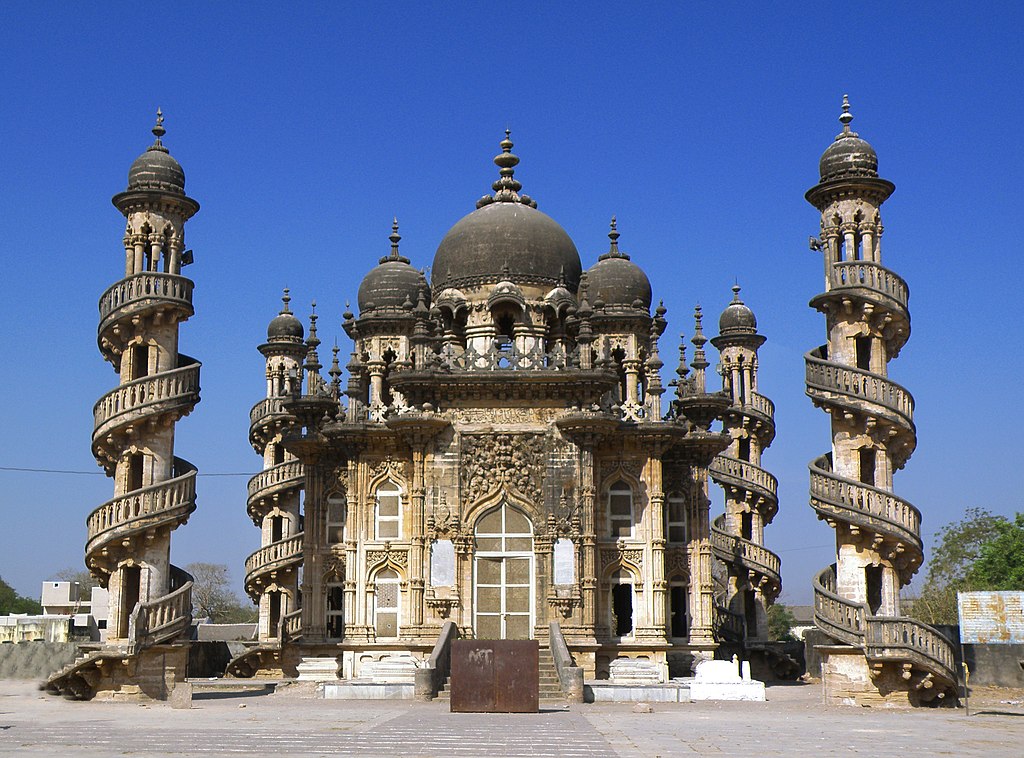
Now, to the meat of today's post. Despite my love of the west's medieval art and architecture, I have an intercontinental heritage. The achievements of imperial China, Japan, and Indonesia (my mum's home country) have not escaped my study by any means. Indeed, there's almost nothing I enjoy more than seeing the West and East come together in harmony. I therefore share with you some photos of Indo-Saracenic architecture, also sometimes called Indo-Gothic or Hindu Gothic. We have the British Raj to thank for bringing the Gothic revival to the valleys of India. That's not to say that the synthesis of Gothic with traditional Mughal architecture was wholly peaceful. After the rebellion of 1857, the Brits smashed quite a bit of the old Red Fort for no good reason. But in the aftermath, British architects sought to blend the Gothic revival (along with other European styles) with Mughal to harmonize the transition and legitimize their reign. Here are some examples:

Mohabbat Maqbara Palace, Junagadh (a mausolem)

Municipal Corporation Building, Mumbai (Bombay).

Mysore Palace. I believe it may still be an official residence of the maharajas of Mysore.


Velankanni Matha church. Designated a basilica by Pope John XXIII.


Lahore Museum (Pakistan)

Sunday, June 2, 2013

No visitors allowed: a medieval solution to the cessation of White House tours


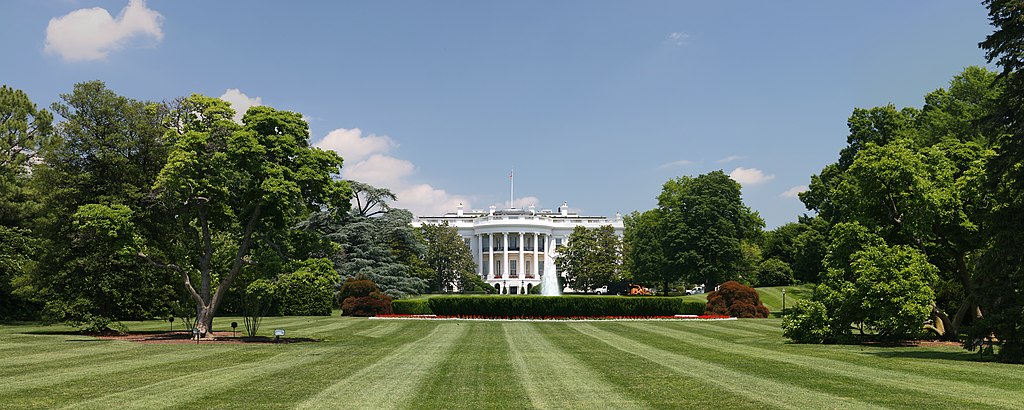
Versailles. Fontainebleau. Windsor Castle. The Tower of London. The Vatican Palace. In the old world, lives were made and broken in these halls of power. Some people go to tea gardens or the great outdoors to commune with nature; I choose to tour historic sites and get in touch with the forefathers of our civilization by walking through the same corridors, seeing the same walls they passed through day in and day out. The places I mentioned above are just a few of the great buildings I've visited in the past, but one very important site is conspicuously absent from that list: the presidential palace of my own country, the White House.

Every time I've visited Washington, DC in the past and checked with my local member of Congress to get tickets for the White House, they were either unavailable or I was asking less than a month in advance. Since it's an active seat of government and not just a museum, and the President is probably the most desirable assassination target on the planet, I understand the need to jump through hoops. Truly, I do. But this year, before another upcoming trip to the capital, I checked with my Congressman again, only to find this message on his website:
"President Obama has chosen to suspend White House tours effective March 9, 2013. The President claims that this is due to sequester spending cuts. But there are plenty of unnecessary and duplicative government programs that could be cut instead of White House tours. The President should find ways to reduce spending in other areas so White House tours can resume. Meanwhile, public tours of the United States Capitol will remain open. Congress chose to implement alternative spending reductions to ensure that public tours of our nation’s Capitol building would continue. Please enjoy your time in the nation’s Capital. And if we can be of help in other ways, let us know."

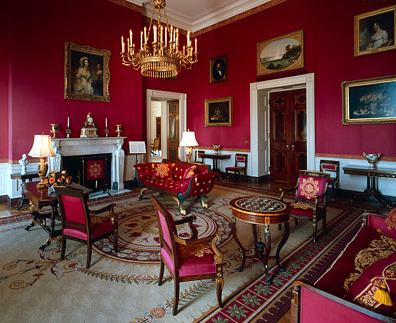
Indeed. I confirmed on the White House's own website and other sources that tours are still suspended. Now, some people make a profession out of reading the news and hating President Obama (or Bush, five years ago) for everything he does or doesn't do. They remind me of those who blame God for starving children in Africa, and in doing so, they've made Obama a god in their own minds. In this instance, however, I believe I'm fair in saying that the President, being clearly in charge of White House affairs, has committed a major faux pas here, and it's not just because touring the White House has been one of my aspirations since I read a book about it in the 3rd grade. How many generations of children have passed through the East Room, the Blue Room, the Lincoln Bedroom, inspired to ask themselves, "some day I will work here"? Not anymore, apparently. A transparent administration? Negro, please. We can't even see the public areas of your house now; and I use "your" in a very limited sense, because the White House is actually the property of the state, funded by the public. It stands to reason that with the proper precautions, good citizens should be able to tour the seat of the executive branch, just as I can still visit the Capitol or the Supreme Court building. Right?

The given reason for the suspension of tours is to cut federal spending. A noble goal in itself, but the cessation of tours only saves the Secret Service about $74,000 a week. That's just a drop in the great ocean of deficit, but it still raises the question of why it would cost that much just to give tours. Having never been on one, I couldn't imagine.... I do have one solution nonetheless. 

In the medieval world, a noble family would send their children away to be trained in the arts of war and leadership at another nobleman's castle. The first step on the path to knighthood was becoming a page, a servant in another lord's household. Perhaps one reason the medievals sent their children away was to break them out of their comfort zones and more quickly adapt to responsibility and obedience. In any case, our federal government today has a similar institution. The U.S. Senate has pages recruited from the nation's brightest high school juniors to deliver messages and otherwise serve senators' daily needs. The House of Representatives had pages as well until 2011, again due to budget cuts and a belief that they were obsolete in our age of smart phones and other toys (which clearly misses the point entirely). 

Capitol pages with Vice President Thomas Marshall (Wilson administration)


But still, flying in, housing and feeding all those pages from around the country for all those Congressmen must have cost some money. Let's assume, for now, that the cut was reasonable. I have a similar, but more cost-friendly solution for the White House. Let the President instead take as his "servants" the children of statesmen who already live and work in the capital: the children of Congressmen, other federal officials and their employees. They would naturally want their children to get a "foot in the door" of political office by working as closely to the President as possible, so positions will be competitive. But since their parents work in DC, they can go directly home afterward without the need for room and board provided by federal funds. And of course, as children of civil servants, they would be working at the White House for free. The only cost to the government would be minimal Secret Service supervision in case things go awry. The children get a taste of responsibility and get to meet hundreds or even thousands of their future "subjects" every week through tours. It's a win-win for everybody.

Tuesday, May 28, 2013

Memorial Day goes Gothic: the Washington Chapel

(This is technically a day late, but I started on it yesterday.)

Happy Memorial Day, medievalists. I have to confess that, despite being a former soldier, if I couldn't go to work today or go back to my university to do an errand, I would've forgotten Memorial Day even happened. This is probably the real reason why we have state-sanctioned holidays. 

Before I show you these photos I assembled (some from my own camera, but most from elsewhere on the Internet), I'll share with you something I learned from my southern history class last semester. Did you know that southerners didn't commonly celebrate the Fourth of July until after World War II? I didn't, and I'm from a centuries-long line of southerners. You see, it took two world wars, suffering and bonding with men from the North and the West in godforsaken trenches and foxholes, in order for us southerners to feel truly a part of this nation again. Before that, southerners observed Memorial Day. In those days, it was called Decoration Day because families would decorate the graves of loved ones who died for the ill-fated Confederacy. The tradition of honoring the fallen of the "lost cause" continued even after anyone who had personally known those soldiers had died. In every single county of the South, you'll see a monument of a young man in Confederate dress, perhaps looking away into the distance. What about these fallen soldiers was so potent, so powerful that it would cause 3rd and 4th generation southerners after the war to venerate men they had never known?

Because there is power in sacrifice. Whether the cause was actually righteous or not is irrelevant; the simple truth is that in the Civil War, as in most modern wars, those who died were chiefly the nation's youngest, ablest-bodied men. The monuments show young men looking away into a life they never had. Now imagine nearly a million men with entire lifespans, dreams, and ambitions ahead of them, all put into the meat grinder of politics at the behest of the wrinkled politicians who have already lived theirs, whose greatest discomfort is the sweat soaking their over-starched Victorian suits as they look over war briefs behind a desk. That, I believe, is the tragedy which made Decoration Day the surrogate national holiday of southerners for a century. Sadly, the situation is not much different today. You may have noticed the memorial pages on your favorite news websites: so-and-so killed in the line of duty in Iraq or Afghanistan sometime between 2001 and the present, age 20. 24. 19. Perhaps, as you read this, you realize you've lived twice or even three times longer. If it were up to me, I'd pass a constitutional amendment requiring the President and at least 10% of all the members of Congress at any given time to take to the field of battle in person, whenever a war must be waged. Since no president wants to spend his entire term in a bunker in some remote wasteland, fearful of a suicide bomber charging in at any given moment, wars would end a lot more quickly. Though that, of course, is a debate for another time. For now, let's look at a unique monument to soldiers from an even earlier war.


Upon the hills of Valley Forge, Pennsylvania, where General George Washington's troops spent the winter of 1777, there stands a chapel in his memory, as well as those of the soldiers who died in the Independence War. Now, you may be well aware that our "national architecture" usually consists of classical knockoffs designed to make America look like the Roman Republic reborn. Abraham Lincoln looks over the National Mall, enthroned like Jupiter in a Greek temple. Thomas Jefferson stands proudly in a new Pantheon. But you may have never seen our national history (or "civic religion" as it called it in my previous post) given the Gothic treatment until now.

I had the pleasure of visiting the Washington Memorial Chapel, built between 1903 and 1917, last year. For a building that was raised, brick by brick, in the 20th century (and completed in the middle of World War I, no less) it is a magnificent edifice. It defies the modern man who says "we have forgotten how to build great temples" or "there is no money to build these wasteful things". 


The chapel itself has a modest seating capacity (about 200) but is quite well-furnished. The photo below is from the back of the nave in HDR so you can see all the little details. For example, the coats of arms of all the states studded amidst the wooden ceiling.


This one is in natural lighting.


I believe all the flags are of the original 13 colonies, and the one on the right, furthest from the camera, is George Washington's coat of arms. (For those curious, that design has been used by Washington's family ever since his ancestor, William de Wessyngton, took possession of Washington Old Hall in Durham in the 12th century! It appears on a 15th century window in Selby Abbey here.) I also seem to recall a tour guide saying that a flag of each of the 50 states is placed upon the altar every week so that prayers are made for the people of that state. The remaining two weeks are given to the territories and the District of Columbia. If that's not right, it's because I mixed it up with what a tour guide said when I visited the National Cathedral in DC, or because I just made it up. Moving on...

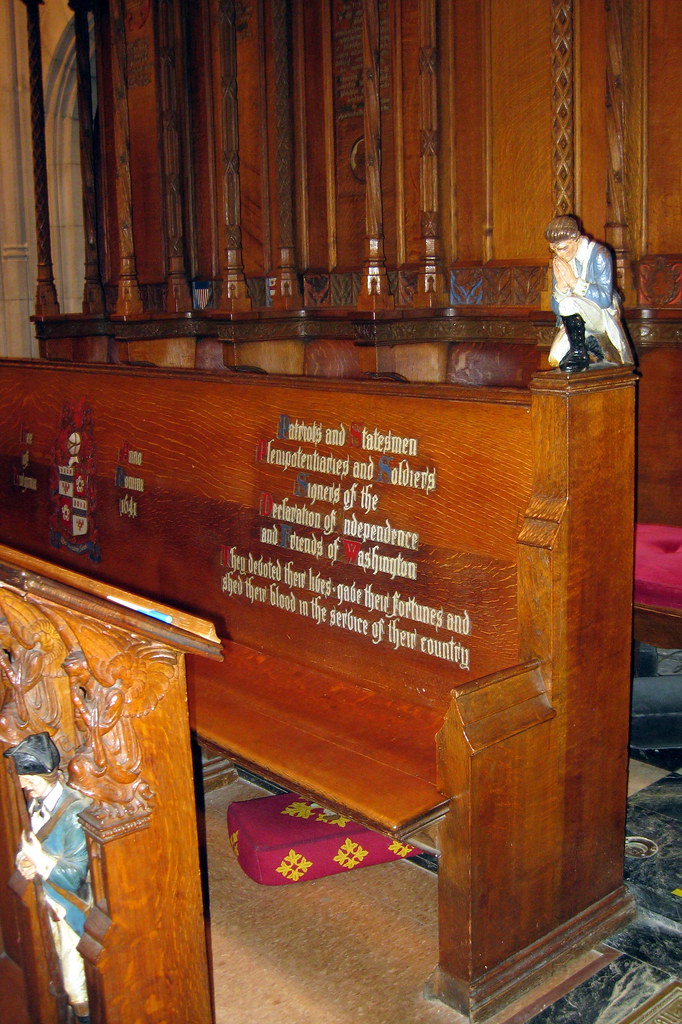
The details on the woodwork behind the choir stalls are especially remarkable. The choir is guarded by statuettes of soldiers in the uniforms that would have been seen in Valley Forge. I can't tell what's written below them, under the coats of arms.


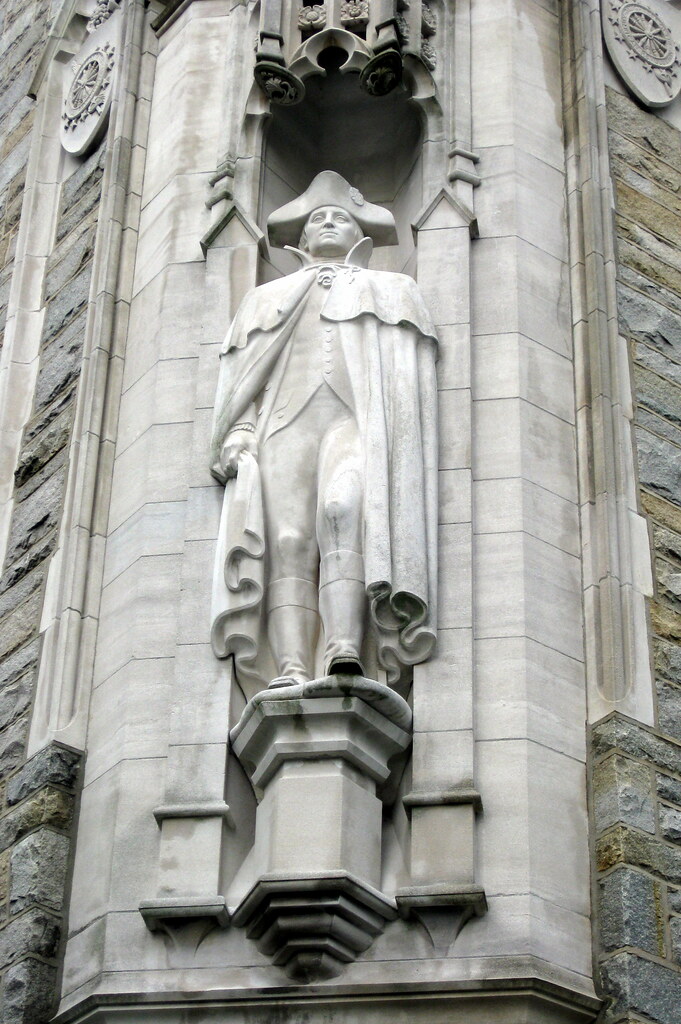
"Idols" of Washington:


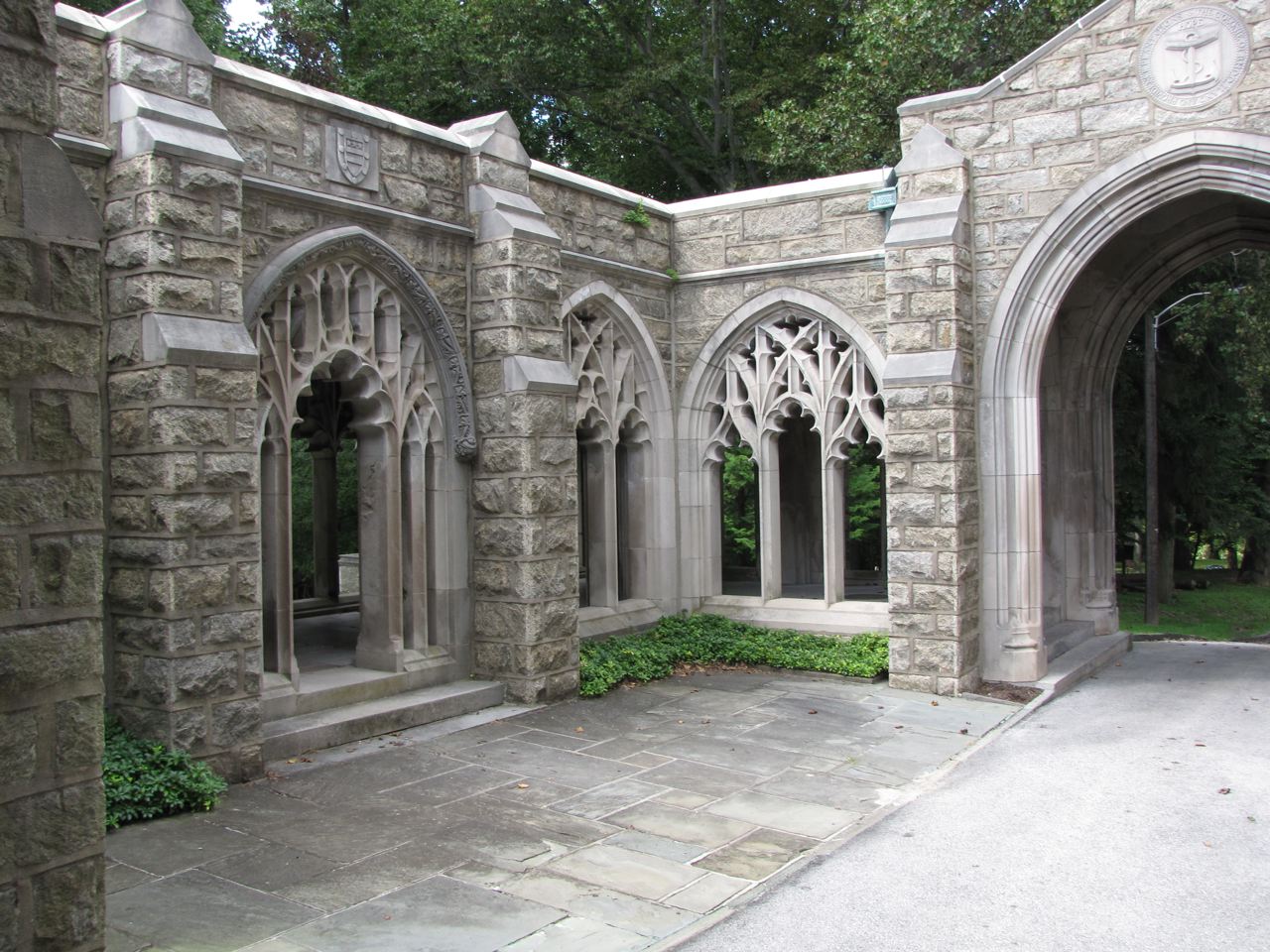
The chapel also sports a monk-less cloister:


Though a national shrine, there are many memorials for the foreign generals who trained the colonials at Valley Forge or otherwise fought in the war. This floor seal names Casimir Pulaski, a Polish noble who saved Washington's life and commanded one of only a few cavalry regiments in the entire Continental Army. He was mortally wounded in the Battle of Savannah and is one of only seven people to have ever been awarded "honorary American citizenship". Similar seals exist beside this one for the Marquis de Lafayette, the Comte de Rochambeau, and Baron von Steuben, among others (in case anyone forgot that the American Revolution was an international endeavor).


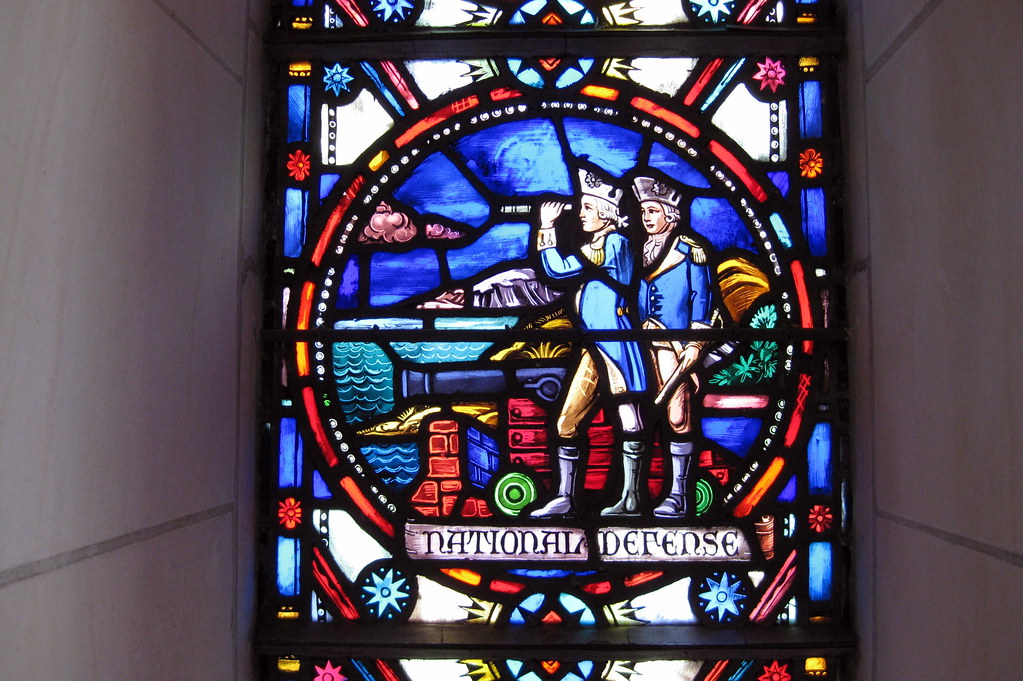
Detail of a stained-glass window in the "Patriot Tower".


The Washington Chapel is such a charming, Gothic edifice that it's no wonder it's a popular wedding destination. I'd get married there myself if it weren't Episcopal and wouldn't require an Episcopal's bank account to rent out. But as an experiment on conforming Americana to a romantic medieval aesthetic, I give it high marks. And for the skeptics out there, please be aware that the Gothic royal chapels of Europe (such as Saint George's Chapel at Windsor Castle) are no less works of propaganda to boost the egos of their kingly patrons. By contrast, the Washington Chapel was built entirely by donations from private citizens. It was built upon the romanticism of the American citizenry; the same which allows fallen servicemen and women to be revered in this country more than any other in the world, and which raised up a thousand monuments in a post-war South. The phenomenon is not really so different from that which created so many saints by popular acclaim in the early medieval world, and that which built the great shrines of Santiago de Compostela and Thomas Becket from the offerings of pilgrims. With due respect to American canonized saints like John Neumann and Kateri Ketakwitha, they just don't occupy the same space in even a pious American Catholic's heart, much less an average American who has certainly never heard of them. For good or ill, our soldiers and generals are the closest thing we in the United States have to saints. And if the cult of the American warrior is not an example of modern medievalism, I don't know what is.


Sunday, May 26, 2013

A good week for medievalism, and thoughts on education

I've been remiss in posting, dear friends, but the world still turns whether or not I issue forth a new article every week. This week is especially good for the medievally minded, and here's why:

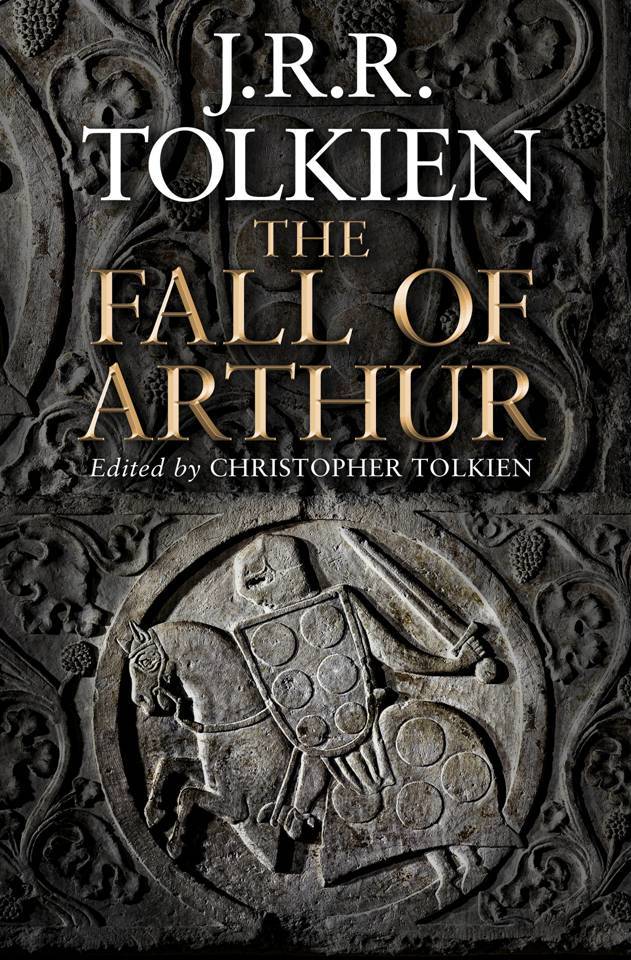
1.) J.R.R. Tolkien published a new book. The mastermind behind middle-Earth is starting to rival Tupac in posthumous contributions; this time, it's The Fall of Arthur, an unfinished epic poem giving us Tolkien's spin on the matter of Britain. I've not yet read it myself, but from what I know, Tolkien has dispensed with the Grail and the courtly love traditions, opting instead to give his audience a raw, more "English" approach to the legend of King Arthur and his war against the Saxon invaders of the early Middle Ages. I have full faith that his style won't bear any resemblance to that abortion starring Clive Owen. However, buyer beware: the poem only occupies a small portion of the book. The bulk is filled by notes and essays written by his son Christopher on "The Poem in Arthurian Tradition" and other such subjects. You'll be disappointed if you were hoping to pick up a fully-fleshed, or even half-fleshed work.


2.) Sir Christopher Lee will release his next metal album tomorrow on his 91st birthday. Talk about a prolific career: Lee, who is old enough to have fought in World War II (and did), already holds the record for the biggest filmography of any major actor ever. Aside from reprising his role as Saruman in the Hobbit films, he can also boast of being the oldest metal performer of all time. Tomorrow will usher the arrival of Charlemagne: The Omens of Death, a sequel to Lee's previous album (Charlemagne: By the Sword and the Cross).


A music video from Lee's previous album:


3.) For those of you who are fans of George R.R. Martin's A Song of Ice and Fire saga, HBO's Game of Thrones next episode (the following Sunday, as there is no episode scheduled tonight) is titled "The Rains of Castamere". If you've read the books, then you already know what's about to happen. If you've only been following the TV series...... well, gird your loins. Winter is coming.

"And so he spoke, and so he spoke, that Lord of Castamere but now the rains weep o'er his hall with no one there to hear."


In other news, I've been dwelling a lot on what really matters to the average American, and how to gain their attention. I never expected this blog to go viral, but my goal from the beginning has been to reach a relatively broad audience. If I can't go beyond the tweed jacket and pipe smoking crowd, then I've failed. The trouble is that I often feel completely out of touch myself. In my column a couple months ago, I already outlined how Pope Francis and I seemingly exist on two different planets, despite being of the same religion. Not long ago, I had the unpleasant experience of feeling like a dinosaur in my mid-20's when I was substituting for a high school class and the given assignment was to watch The Empire Strikes Back. No one in any of the classes that day had ever seen a Star Wars movie before, not even a nerdy kid in the back of the room to play the exception to the rule. It makes sense now, but at the time, it took me a while to wrap my head around the idea that an entire generation could miss out on what I took for granted to be a staple of pop culture. 

Now, obviously there's nothing to gain from being able to distinguish the various kinds of TIE fighters or AT walkers, but I learned a valuable lesson that day: the things which I assumed were part of a commonly shared American culture don't actually exist. I routinely ask students what sorts of movies they watch or games they play, and find that despite the fact that I'm not much older than them, my interests and theirs rarely ever coincide. The same can probably be said for the entire faculty at innumerable inner-city schools across the nation. Google for accounts from inner-city public school teachers and you'll find the same story everywhere: white, middle-class do-gooder seeks to change the lives of disadvantaged kids in poor areas, then experiences severe culture shock on his first day when he realizes it was nothing like his own school. All of a sudden, yesterday's bickering over the effects of Harry Potter on our kids seems ludicrous when you come across a whole classroom of high schoolers who are incapable of reading any of those books, even if they wanted to (they probably don't). Worried about helicopter parents intruding into every aspect of their adult children's lives? Instead, be thankful they have the time and energy to bother in the first place. There are countless schools where parental involvement is almost nonexistent because the parents have to work multiple jobs just to make ends meet. The children who have been saddled by generational poverty go on to have more children, and the cycle perpetuates itself. And since lower-class families reproduce at a higher rate than the affluent middle classes, it doesn't take a genius to figure out who will be inheriting America in 20 or 30 years.

The above statement, to be clear, is not a preamble to a racist or eugenicist rant about the direction our nation is going. Nor does it precede a patented 7-step solution based on what the medievals would have done, because (as members of a subsistence economy) they wouldn't have done anything. Public education is an entirely modern construct which requires a modern solution, if it can be fixed at all. I'm merely raising a question: in 30 years, what will be the ties that bind our western, American culture? Certainly not the civic religion of the Founding Fathers, those ancient dead white men who owned slaves and whose descendants stole half of Mexico. (It's already a usual sight for entire classrooms to remain seated and gab through the Pledge of Allegiance. I don't know why schools still bother with it.) Nor will it be Christianity, which continues its endless fracturing and commercialization at the hands of hack preachers. Shakespeare? He's already been the bane of high school students for generations, but I've spoken to students who were seniors and never exposed to the Bard at all because it wasn't relevant to achieving acceptable standardized test scores. (I was amused when one student thought I was British because of the way I speak, though I assure you my dialect is your average newscaster American.) To those certain "conservatives" who think education is useless if it doesn't gear people toward being a cog in the industrial workforce, I hope you're happy. At any rate, despite the current over-saturation of liberal arts graduates, the future doesn't bode well for the humanities, much less medieval studies in particular. Ironic that as we lose sight of our past, we're bound to resemble the world as Saint Gregory of Tours saw it, when in describing 6th century Gaul in The History of the Franks he said,

"With liberal culture on the wane, or rather perishing in the Gallic cities there were many deeds being done both good and evil: the heathen were raging fiercely; kings were growing more cruel; the church. attacked by heretics, was defended by Catholics; while the Christian faith was in general devoutly cherished, among some it was growing cold; the churches also were enriched by the faithful or plundered by traitors-and no grammarian skilled in the dialectic art could be found to describe these matters either in prose or verse; and many were lamenting and saying: 'Woe to our day, since the pursuit of letters has perished from among us and no one can be found among the people who can set forth the deeds of the present on the written page.'"