Showing posts with label Requiem Mass. Show all posts

Wednesday, May 17, 2017

Requiem: the album


I've finally gotten around to seeing the promo video for the FSSP's new chant album: "Requiem". It's a stunning clip that deserves to be watched with full attention (fullscreen, 1080p, not on a smartphone). Everything about it exudes the medieval ideal of the liturgical choir... and what I'm striving to attain with my little start-up schola of male, surpliced chanters in the Philadelphia area. See below:


"Requiem" can be purchased directly from the Fraternity's site here. As an aside, I'm pleased to observe that one of the seminarians featured in the video assisted in the role of subdeacon for our nuptial Mass in 2014....


Thursday, April 28, 2016

Radio chat is now online!

The Poor Clares in San Antonio attending our nuptial Mass in 2014

You can now listen to my radio "fireside chat" with the Poor Clares of Perpetual Adoration in San Antonio at this link, provided you have iTunes installed. Just select the broadcast for April 27, 2016.

Our discussion, which was prompted by the month's-mind Requiem Mass offered for their late abbess, Mother Angelica of EWTN fame, at my former parish in San Antonio, revolved around the prayers and Gregorian chants of the Requiem, devotions for the souls in purgatory during the Middle Ages, the Office of the Dead, and the importance of reclaiming the spirituality behind these traditions in the modern age. 

The sisters' main site is the Monastery of St. Michael the Archangel, or Texasnuns.com. From there, you can learn a bit more about them, buy their soap, and find their blog, Quidnunc. My first real encounter with the Poor Clares was when they attended a Requiem Mass for my stepfather years ago. Since then, I correspond with them every once in a while, and was honored to design service booklets for one of their solemn professions. And, if you saw my post two days ago, I did the same for the Requiem Mass for Mother Angelica according to the Divine Worship Missal of the Personal Ordinariates, which is now on YouTube below.


Saturday, February 20, 2016

The importance of singing the Mass


I just watched the whole funeral broadcast for Justice Scalia and have to say, that was the most reverent Mass of burial anyone could reasonably expect out of the National Shrine, given the circumstances. I could nag about certain details like the use of white instead of black vestments, or the (entirely-expected) lack of the Dies Irae, but let's face it: we will probably never again witness such a high-profile Mass with the Vice President and so many other notable persons in attendance where the Introit Requiem Aeternam is sung and the priest uses the Roman Canon, much less preaches a homily so explicitly Catholic and mindful of the four last things as what just happened this morning in Washington. Has Biden ever sat through a funeral oration where the priest began:
"We are gathered here because of one man. A man known personally to many of us. Known only by reputation to even more. A man loved by many. Scorned by others. A man known for great controversy. And for great compassion.

That man, of course, is Jesus of Nazareth." 
Talk about a bait-and-switch to remember!

Here, though, I'd like to focus on a smaller detail that no other blog is likely to mention: the fact that Father Paul Scalia went so far as to sing the collects, the Preface, and a great deal of the other parts of Mass. One of the potential geniuses of the pre-conciliar rite was how it required a priest to sing the entire liturgy if there was to be any sung or solemn Mass at all. Of course, in the last couple of centuries or more, security turned to folly, and clerical laziness meant that low Mass would be the most well-trod path. With the 1970 Missal abolishing the hard distinctions between low, sung, and solemn Mass, the vast majority of priests naturally opt not to sing any of the Mass at all (except, oddly, the "by him, and with him, and in him" at the end of the Eucharistic Prayer; a phenomenon which I hope someone will explain to me some day).

Why does it matter, you might ask? Quite simply, because it takes the man's personality out of the liturgy and gives him the voice of the saints throughout the ages. Wolfgang Amadeus Mozart, of all men, has said he would have traded all of the music he ever composed in exchange for having the credit for composing the Gregorian Preface. But when a priest or other reader in the liturgy merely recites a text, he inevitably gives it his own voice; he impresses the liturgy with his own personality. As glad as I was to see Justice Clarence Thomas read the Epistle, and as dignified as his voice is, it's still distinctly Clarence Thomas reading the word of the Lord. When a lector or subdeacon chants the text in the traditional tone, it's much harder to think of its words emanating from another mere mortal's mouth. Above all, when a deacon sings the Gospel in the midst of the assembly, I think not of the man reading it, but of the words as though they were coming from Christ Himself.


The deacon singing the Gospel at our nuptial Mass


Friday, February 19, 2016

Honoring and praying for the dead: then and now

A few of the 180 clerks that have worked for Justice Antonin Scalia lined up at the steps to the US Supreme Court. At the head, in cassock and surplice, is the late Justice's son, Father Paul Scalia of the Diocese of Arlington.

As I type this, the body of Justice Antonin Scalia lies in repose at the United States Supreme Court. I'm not generally a political blogger and it's not my intention to canonize the man here, but from what I know of him, Justice Scalia was an exemplary Catholic with a great heart and a Morean sense of humor, and was committed to a consistent interpretation of the Constitution over any political or party loyalties. I've learned at least one fascinating fact about Scalia every day this past week from articles shared by friends. For instance, on one occasion, he walked into a Catholic church that had been remodeled after Vatican II and loudly exclaimed, "where the hell is the tabernacle!?" It's still hard to believe he's gone; Scalia sat on the Court since before I was even born and will be, most likely, the highest-ranking US public official to ever have frequently attended the traditional Latin Mass for the rest of my life (indeed, a handful of traddies find it highly suspicious that one of "their own" was able to make it so far up without soiling his immortal soul in the process).

There was probably some heated debate behind closed doors between Scalia's son, Father Paul (a regular celebrant of the traditional Latin Mass), and the powers-that-be in the Archdiocese of Washington over what form of Mass the Requiem for the late Justice would take, but it was decided that it would be the Ordinary Form. Whatever Scalia's wishes might have been, it was surely determined that a Requiem in the old rite would have been just too bizarre and even embarrassing to cast before the whole nation's gaze. It could have been the most-watched Latin Mass in history since John F. Kennedy's funeral, but alas. It's a twofold shame; first, in that Catholics have near-completely abandoned the practice of praying for the dead, and second that they, like the rest of the developed world, have little concern for respecting the dead's wishes or honoring them in fitting ceremony.

The old Requiem Mass with its solemn, somber chants was the finest jewel in a crown of prayers and special rites developed by our medieval forebears to remember and pray for their deceased loved ones, even in a world where death lurked behind the corner for every man, woman, and child with no respect to age, status, or wealth. The Ordo Commendationis Animae (Order for Commending a Soul to God) began with prayers over the just-deceased person, then a procession bearing the corpse directly to the church. This was a communal event in every village, whereby even those who didn't know the deceased could join. From 1389 on, an indulgence of one hundred days was attached to joining a funeral procession on the way to the church.

There were, of course, no funeral homes in those many centuries, so bodies were cleaned and prepared on-site (perhaps in the crypt), then laid out in the chancel on a platform encompassed by a "herse" (a framework to support candles over and around the body) as the clerks or monks began Vespers from the Office of the Dead. This vigil of prayer is, as far as I know, only kept today by very devout associations such as the Knights of Columbus, who are committed to praying the Rosary on the night before any deceased member's Mass of burial.

Illustration of a herse by Gothic revivalist Augustus Welby Pugin, a "patron" of this blog.

The Office of the Dead continues the following morning with Matins and Lauds. Although these were sung chiefly by the clergy and monastics, evidence abounds that these services were held nearly and dearly by the lay faithful. Every book of hours (those prayer books, often richly illuminated, used by the more well-to-do laymen of the medieval world) contained, usually toward the end, a full order of service for the Office of the Dead. Unlike the other hours and devotions, which tended to be abbreviated forms of the ones used by the clergy, the layman's book of hours contained the whole Office of the Dead, unabridged. We can see from surviving last wills and testaments that nobles would leave very specific instructions for how these offices would be executed upon their deaths, indicating their preferences for the Placebo (the opening of the psalm Placebo Domino from Vespers) or Dirige (from Matins, Dirige Domine) just as anyone today might call for "Amazing Grace" or "On Eagle's Wings".

An illustration of the Office of the Dead from the Llangattock Hours
Even before the main funeral Mass, other Requiem Masses might be offered the day before or the same day upon receiving news of the death. A testator might have even requested one or more of his favorite (non-Requiem) Masses to be offered for his soul. Imagine, then, a priest vested in white or red to offer the votive Mass of the Holy Ghost or a deceased's patron like Saint John the Baptist, complete with Glorias and Alleluias, before then changing to black to begin the Requiem!

We come, at last, to the Requiem Mass itself: the Mass with prayers and chants dedicated entirely to the eternal rest of the deceased. The whole liturgy is directed for the departed soul: the Roman liturgy eventually even modified the Agnus Dei to end with "grant him (her, them) rest" rather than the communal "have mercy upon us". The most famous of all these chants, and the one most likely to appear in a film touching upon anything related to the danse macabre is the Dies Irae: the Day of Wrath. This sequence, at least six minutes of chanting about God as the just and terrible Judge on the last day, remains an option for Ordinary Form funerals in theory, but is so rare now that we can call it effectively suppressed. No other single aspect of the traditional Requiem was so memorable, nor so despised and vilified by liturgical authors during and after the Second Vatican Council, as the Dies Irae. The four last things (death, judgment, heaven, and hell) have never been so out of fashion.


In the earliest stages of the Requiem Mass's development, say the seventh or eighth centuries, monks were wont to keep the practice of offering Requiems to themselves, judging the laity unworthy of having a special Mass offered just for themselves. This quickly gave way to the opposite approach; that every Christian, no matter how sinful, was entitled not just to their own Requiem, but an exsequial high Mass; a spirit of charity to the dead that lasted right up to the Reformation.

Illustration of a Requiem Mass by A.W. Pugin

At the end of the Requiem, the priest approaches the body to incense it and pray the absolutions, imploring God to spare the soul the temporal punishments earned in purgatory for sins forgiven in life. Modern Catholic funerals no longer require the presence of a body, but in the medieval world, it was essential to even have a Requiem at all. If a body couldn't be had, then a mock-up of an empty casket, called a catafalque, was erected to represent the body. This was especially needed during the Crusades and the Hundred Years' War, when men regularly died in battle many miles away from home. Even then, great efforts were made to mark exactly where a body was buried, so that years or even decades later, a family could dig it out and reinter it in their family chapel. Catafalques, likewise, were erected even for memorial Requiems for groups of persons, or for commemorating all the souls of the faithful departed on All Souls' Day.

A catafalque erected for an anniversary Requiem for King Louis XVI of France, who was beheaded during the French Revolution

Time will tell if anything remotely resembling the traditional exequies will take place for Justice Scalia at the National Shrine tomorrow. EWTN will begin broadcasting at 11am. I've read that Scalia's son, Father Paul, will preach the homily, but don't know if he will be the celebrant. In any case, I'll be watching, thinking, and praying.


Father Paul prays Psalm 129 (130), de Profundis, beside his father's casket in the Supreme Court building.

Friday, March 27, 2015

Anatomy of a prayer: a collect from a medieval rite of reinterment


I've been following the blog called How to Rebury a King with great interest. This site is maintained by Dr. Alexandra Buckle, a musicologist and consultant for the committee that created the Anglican liturgies for the reinterment services at Leicester Cathedral this week. Not long ago, Dr. Buckle discovered an old manuscript detailing the rite of reinterment as it was used for Richard Beauchamp, Earl of Warwick (whose tomb made an appearance in my recent article on hearses and hearse-cloths). While manuscripts detailing medieval burials abound, this particular document is the only one in known existence that outlines the order of service for a reburial.
 
That blog's entry for today (here) shared a collect for reinterment which draws on the imagery of Ezekiel's valley of bones, but which is not known to exist anywhere else, period. Unfortunately, that prayer had a section that was purged for its overly medievalist, overly Catholic material for Thursday's service; but Dr. Buckle was gracious enough to at least post the full prayer and translation for the rest of the world to see. I'll also reproduce it here, but in reverse order.
 
 
Here's the prayer used at the service on Thursday, contemporized and purged (as seen on page 16 of the order here):
"Almighty and eternal God, creator and redeemer of souls, who by the prophecy of Ezekiel deigned to bind together dry bones with sinews, to cover them with skin and flesh, and to put into them the breath of life: as we return the bones of your servant Richard to the grave, we beseech you to grant him a peaceful and quiet resting place, through Jesus Christ our Lord, who is alive and reigns with you, in the unity of the Holy Spirit, one God, for ever and ever."
 
 
Now, here's the full prayer in translation, with the excised portion in colored text:
"Let us pray. Omnipotent and eternal God, creator and redeemer of souls, who through the prophecy of Ezechiel are worthy to bind together truly dry bones with sinews, to cover them with skin and flesh, and to put into them the breath of life, we supplicants pray to you for the soul of our dear [INSERT NAME] whose bones we now place in the grave that you may deign to grant him a peaceful and quiet resting place and, that having remitted all his sins of worldly heedlessness as conceded to him by a pardon of full indulgence, that, through your ineffable mercy, you erase and wash away all of it, whatever he has erred in this world by his own or another’s guilt. Who with God the Father and the Holy Spirit lives and reigns, God through all for ever and ever. Amen."
 
 
And finally, for reference for the scholars among you, the original Latin text:
"Oremus. Omnipotens sempiterne Deus, animarum conditor et redemptor, qui per Ezechielis vaticinium ossa vehementer arida nervis compingere, pelle et carnibus superinduere, ac in ea spiraculum vitæ intromittere dignatus es: te supplices deprecamur pro anima in cari nostri N [nomine], cuius ossa iam denuo tradimus sepultura, ut ei tribuere digneris placidam et quietam mansionem et remittas omnes lubrice temeritatis offensas, ut concessa sibi venia plenæ indulgentiæ quicquid in hoc seculo proprio vel alieno reatu deliquit, totum ineffabili pietate tua deleas et abstergas. Qui cum Deo Patre et Spiritu Sancto vivis et regnas, Deus per omnia sæcula sæculorum. Amen."
 
I don't blame Dr. Buckle for whatever role she had in excising the prayer. The Church of England's doings aren't any of my business; indeed, such medievalisms as "a pardon of full indulgence" and "by his own or another's guilt" would feel quite out of place there. No doubt Archbishop Cranmer came to many of the same conclusions back in the 1540's and 1550's when he took the axe to all the Catholic funerary rites as much as the populace would allow him to without rioting.
 
What's more tragic, I say, is that this sort of bowdlerization was exactly the same as that systematic process of destruction that Archbishop Bugnini applied with his liturgical jackhammer to the Missal, Breviary, and other sacred texts in use by the Roman Church in the wake of the Second Vatican Council. Yikes!


-Today in history: Henry IV: the man whose claim to the crown started the troubles that led to the Wars of the Roses

-The first day: Richard on tour: select photos from the procession on Sunday, and the cardinal-archbishop of Westminster's Compline homily

-The Bible in Richard's day, and, was Richard a proto-Protestant?: on the king's reading habits and what to make of his Wycliffe New Testament

-A requiem for Richard: on the Requiem Mass, the king's faith, his book of hours, the cult of purgatory, and the chantry chapels of Richard's age

-Of hearses and hearse cloths: looking at Richard III's funeral pall and dressing the dead in medieval times

-Richard III's claim to the throne: sanguinity, statue, or sacrament?: Examining Richard's dynastic claims and what makes a king the king

-O God of Earth and Altar: a hymn by G.K. Chesterton, used at the reinterment on Thursday

-The poet laureate on Richard III: the poem at the reinterment. Also, Benedict Cumberbatch.

At last, a requiem fit for a Catholic King: solemn Latin Mass

 
The church of Saint Catherine Labouré in Leyland hosted a solemn Requiem Mass on the same day as his reinterment in Leicester. It was according to the Missal of 1962. Here are some images from the blog of Father Simon Henry, whose original post may be found here. The good priest says that after the Mass, the congregation enjoyed "a themed buffet with such tasty morsels as Yorkshire pudding with venison sausage or duck in port sauce, Pye of pork meat made with paest royall, Ribbes of beef, Quail eggs and roasted chicken calf." I'm jelly now.

Also, an interesting observation: a commenter on Father Simon's blog notes that the Greyfriars; that is, Franciscans; who originally buried King Richard would have probably used the Roman Missal, rather than the Sarum Missal or any other local use. So, the Requiem Mass as celebrated in the 1962 books would be almost identical to any Mass the friars may have celebrated when they received Richard's body.


Chanting the Gospel


Just look at that wonderful, wooden Gothic reredos


Communion of the servers; note the banner with Richard's personal sigil, the white boar, at left
 
A catafalque for the king


Other entries during "Richard III Week":

-Today in history: Henry IV: the man whose claim to the crown started the troubles that led to the Wars of the Roses

-The first day: Richard on tour: select photos from the procession on Sunday, and the cardinal-archbishop of Westminster's Compline homily

-The Bible in Richard's day, and, was Richard a proto-Protestant?: on the king's reading habits and what to make of his Wycliffe New Testament

-A requiem for Richard: on the Requiem Mass, the king's faith, his book of hours, the cult of purgatory, and the chantry chapels of Richard's age

-Of hearses and hearse cloths: looking at Richard III's funeral pall and dressing the dead in medieval times

-Richard III's claim to the throne: sanguinity, statue, or sacrament?: Examining Richard's dynastic claims and what makes a king the king

-O God of Earth and Altar: a hymn by G.K. Chesterton, used at the reinterment on Thursday

-The poet laureate on Richard III: the poem at the reinterment. Also, Benedict Cumberbatch.

Tuesday, March 24, 2015

Richard III: of hearses and hearse cloths


Though last Sunday's procession for Richard III may seem impressive and stately to us, I invite you to consider the possibility that funerary processions (though perhaps not to the same scale) were a relatively common sight even among the commons of the Middle Ages, thanks to the efforts of the guilds. The procession to the church was a visible call for the entire community to come together to mourn and pray for the deceased's soul.
 
A hearse cloth dating to 1539, London.
After being brought into the church, the medieval; denizen's coffin was borne over a hearse; not the car or carriage used to transport a body, but a metal frame which suspended candles over the body while it rested in the middle of the church for one to three nights before the burial. Traditionally, it would have been placed on the hearse, covered with a hearse-cloth (or a pall), and then the clerks would sing the evensong Office of the Dead, beginning with the Placebo. Most parish churches owned a simple hearse cloth for all parishioners to share, but among the wealthier classes, it was common to commission a specially embroidered cloth with fantastical designs to ensure that the deceased would be remembered.
 
Artist Jacquie Binns embroidered the hearse cloth that currently lays over the coffin of Richard III while it awaits reinterment. While it's not what I would have designed, to say the least; and I'm perplexed at how the organizers neglected to build a hearse at all; I can at least appreciate how the artist decided to incorporate the likenesses of several people who were instrumental in the recovery of the king's remains, including Philippa Langley and Dr. John Ashdown-Hill. Some of those personages appear in Channel 4's excellent documentary on the search for Richard III's remains below (even if, as Langley later complained, the documentary made it seem as though she was in love with Richard): Richard III - The King in the Car Park.


One of the more elaborate examples of a hearse, in the medieval sense.
 
One of two or three surviving hearses in all of England. This one is over the tomb of Sir Richard Beauchamp in Warwick.
 
Another is the Marmion Tomb, West Tanfield.


Other entries during "Richard III Week":

-Today in history: Henry IV: the man whose claim to the crown started the troubles that led to the Wars of the Roses

-The first day: Richard on tour: select photos from the procession on Sunday, and the cardinal-archbishop of Westminster's Compline homily

-The Bible in Richard's day, and, was Richard a proto-Protestant?: on the king's reading habits and what to make of his Wycliffe New Testament

-A requiem for Richard: on the Requiem Mass, the king's faith, his book of hours, the cult of purgatory, and the chantry chapels of Richard's age

-Of hearses and hearse cloths: looking at Richard III's funeral pall and dressing the dead in medieval times

-Richard III's claim to the throne: sanguinity, statue, or sacrament?: Examining Richard's dynastic claims and what makes a king the king

-O God of Earth and Altar: a hymn by G.K. Chesterton, used at the reinterment on Thursday

-The poet laureate on Richard III: the poem at the reinterment. Also, Benedict Cumberbatch.


A requiem for Richard: on the cult of purgatory, chantry chapels, and the king's faith


Yesterday, the cardinal-archbishop of Westminster, Vincent Nichols, celebrated a requiem Mass for Richard III at Holy Cross Priory, a Catholic church near (Anglican) Leicester Cathedral. I've only been able to find one photograph, the one you see above. I find it most regrettable that the Mass wasn't of a form that Richard would have easily recognized, especially since the Dominican Rite liturgy is apparently celebrated at the priory daily. Still, there are two noteworthy links to the past from that Mass which I'm compelled to point out.

1.) One of the choirs that sang at the Mass was the Choir of Saint Barnabas Cathedral, Nottingham. Saint Barnabas was one of the first Catholic parishes built in England after Catholic emancipation. It was designed by Augustus Welby Pugin in 1841, sponsored largely by Pugin's longtime patron, Lord Shrewsbury. Unfortunately (with no disrespect intended to its current members who serve in good faith), the choir has not been of the traditional boys/men style for many years.

The Westminster vestment, front
2.) The chasuble worn by Cardinal Nichols at this Mass was an antique; so old, in fact, that some people were upset at the risk simply wearing it at all would pose to the fabric. It is the Westminster vestment, dating to the 15th century and believed to have been worn by the Benedictine monks of Westmnster Abbey during the reign of Richard III. Further, its designs match that of a vestment described in Richard's royal inventories. We have reason to believe, therefore, that Richard may have attended Mass by a priest wearing this chasuble at least once in his life. One description says of the needlework:

"Over the crucifix is a dove symbolizing the Holy Ghost; and over the dove is God the Father surrounded by glory. On each side of the crucifix are two angels in mid air, with chalices in each hand receiving the Precious Blood from the wounds of the dying Christ. At the foot of the crucifix is a figure in armour over which is thrown a robe open at front. This and the following single figures are standing under an architectural canopy in which we see 'Perpendicular' characteristics. On the orphrey on the front of the chasuble are: St. Edward the Confessor, a female and a male saint, the three being crowned and richly attired. All the figures are graceful and edifying. The main body of the chasuble is covered with a beautiful woven 'pomegranate pattern.' Though the general effect of this vestment is somewhat spoilt by its being cut down to the French 'violin shape,' yet it is, nevertheless, very rich and fine." (The Month, Volume 103, page 617)

And yes, before one jumps to the assumption that this chasuble is proof of the fiddleback style's antiquity, I assure you it's quite the contrary! Some Rococo-era vandals sliced the fabric away to conform this fine vestment to the fashions of the day; probably the priests and seminarians of Ushaw College (an active seminary until it closed in 2011 due to lack of vocations), who received the vestment as a gift in 1867. Ushaw does provide us with another Pugin connection, however. Augustus Pugin designed its first chapel, in 1847. Two of his sons, also architects, provided buildings of their own.


Why the requiem Mass matters

What's a requiem Mass, anyway? The name comes from the first word of the Introit chant which begins that Mass: Requiem aeternam dona eis, Domine. "Eternal rest grant unto them, O Lord." It, and all the other proper chants of the Mass have long since been set to famous scores by classical composers such as Mozart's (which were still meant to be sung in the context of actual Masses, not concert-halls), but you may listen to the original plainchant version, which I sing with my Gregorian schola from time to time, below:


Rest from what, though? This liturgy is officially called the Missa pro defunctis, the Mass for the dead: and its chief purpose is to be offered to ease the suffering of a soul in purgatory. Since purgatory is a uniquely Catholic doctrine, only the Catholic Church ever offers requiem Masses for the dead (although the Eastern Orthodox, to my knowledge, have similar services). Most other Christian sects teach that souls only go to one of two places: heaven or hell. But in the Catholic faith, it's understood that many souls, even if they've been forgiven of the eternal consequences of sin (the loss of eternal salvation) by confession, must still atone for temporal consequences of sin by the purifying process we call purgatory, before being admitted to the gates of heaven.

A solemn requiem Mass from a book of hours.
I explained the doctrine in part in my past article on indulgences, but in short, the Church encourages her members to pray always for the souls of all the faithful departed because those prayers may ease the passage of such souls to eternal life. Any prayer may be said to give relief for the souls of deceased loved ones and so on, but no prayer is higher in value than that of the sacrifice of the Mass. Because the Mass is the highest prayer, by which Christ's sacrifice on the cross is mystically re-presented in an unbloody manner, the Church has long applied the Mass's boundless merits to the souls of the departed.

A better understanding of what the requiem Mass is may be gathered by considering who doesn't receive them:
-Requiems are never offered for canonized saints, of course, because those souls are already in heaven and have no need for prayers of repose.
-Requiems are also not offered for the souls of baptized infants and children who die while young; because they died before reaching the age of reason, they had no occasion to ever commit sin, and therefore died as saints. They are buried instead with the Mass of the angels, the clergy wearing white vestments rather than black.
-The question of children who die before their parents can baptize them is a thorny one; while I personally have no doubt that God would bring those children to heaven, this was not a "given" until recent times. Still, even in the strictest theological understandings, a baby has no reason to go to purgatory, so requiems are not offered for them, either.

This leaves everyone else; at least, all Catholics who are known to have died at least nominally within the faith. So, anyone who didn't die while excommunicated. All these Catholics may have the requiem Mass prayed for them, even the worst sinners. [Edited to add: a commenter adds, citing the Catholic Encyclopedia, that the requiem Mass may be offered privately, but not publicly, even for deceased non-Catholics and excommunicated persons under certain conditions.] While the requiem's prayers are of no avail to people who are in hell, there's no way for any of us to know who's there; therefore, having the requiem offered for them is always a good thing. What's more is that the requiem Mass, though it forms a central part of the burial rites of any adult Catholic, is by no means limited to that moment. It can be offered for any Catholic on most days (excluding feasts of certain rank), and is especially recommended on the anniversary of either death or of burial. And, unless the person is declared a saint, requiems may be offered for that person every eligible day until the end of time. And here is where Richard III enters our story.


Richard's chantry chapels

We can get a window into Richard III's beliefs by examining how he treated the dead. From the 13th century until the Reformation, the English were perhaps Christendom's most zealous believers in purgatory and the need to offer souls for the faithful departed. An entire institution was created just for this need: the chantry chapel. A chantry was an endowment for one or more priests to offer requiem Masses and other prayers (such as the Office of the Dead) for the soul, or souls, of the patron. Basically, a priest was given an income solely to offer requiem Masses. Since a priest traditionally could not offer Mass more than once a day, these chantry priests had no liturgical duties to the greater community and could focus the rest of their time on charitable works; a feat much lamented when Edward VI's reformers came around to suppress all the chantries and confiscate their wealth for the king's advisors in the name of redistribution for "the public good".

Remains of the St Leger chantry chapel at Saint George's Chapel, Windsor Castle. It was endowed for two priests to sing for their souls ("with too prestys sy’gyng for ev’more. On whose soule god have mercy") for Sir Thomas St Leger and his wife, Anne of York. Anne was the older sister of Kings Edward IV and Richard III. One of her living descendants, Michael Ibsen, provided his DNA to positively identify the remains of Richard III.
Medieval cathedrals and parish churches alike in England are still filled with the remnants of the chantry chapels, which are often like private churches within a church. These alcoves were originally built by the wealthy, but eventually, people of the common classes also pooled funds together to build chapels to be shared among several families, or for guilds. In the medieval Church, we can see that there was serious preoccupation with the fate of one's deceased relatives and other loved ones. Even by medieval standards, though, Richard III took that devotion to a new level. I will mention some examples named in Aubrey's National and Domestic History of England, among other sources:

-after his elder brother's death, Richard paid the friars in Richmond "for the saying of one thousand masses for the soul of King Edward IV"
-he endowed the chantry priest at the village of Sheriff-Hutton, where he had imprisoned Earl Rivers, with an additional ten pounds per year
-he elevated the chantry at Middleham, where he first met his wife, Anne Neville, into a college of 12 priests; the charter explains his intention was "in part of satisfaction of such things as at the dreadful day of judgement I shall answer for" (so says Seward's Richard III: England's Black Legend)
-and, most notably, he planned to erect a chantry chapel at York Minster with 6 altars and 100 priests. Seward observes that this would have been a monumental expense involving also expenses for hundreds of additional servants, and a great many vestments and vessels. If he had succeeded, Richard would have had enough priests to offer requiem Masses for his soul all day long on every permitted day of the year: truly, in perpetuity.

The Markham Chapel, built in the reign of Henry VIII, is an example of one of the many chantry chapels built in ordinary parish churches: a church within the church. All around it are designs from the "dance of death" motif, reminding all who see it of their own impending mortality.
Yet another abortive project, which was actually on the verge of completion, was Richard's chantry chapel at the site of the Battle of Towton. Claiming the lives of around 28,000 men in 1461, Towton was the bloodiest battle of the Wars of the Roses, and in fact, all of English history until the Somme during World War I. Richard's brother, Edward IV, ordered his men to take no prisoners; bodies piled up in the river until the waters ran red with blood for whole days. Richard set his men to dig the bodies out of mass graves, where they had lain for over twenty years by this point, and re-buried in consecrated ground. He set aside forty pounds for the chantry chapel to be raised atop the very battleground, where priests would pray for the souls of the men on both sides of the war, York and Lancaster. The king said:
"the people of this kingdom, in a plentiful multitude, were taken away from human affairs; and their bodies were notoriously left on the aforesaid field and in other places nearby, thoroughly outside the ecclesiastical burial places, in three hollows. Whereupon we, on account of affection, contriving the burial of the deceased men of this sort, caused the bones of the same men to be exhumed and left for an ecclesiastical burial in these coming months, partly in the parish church of Saxton in our said county of York and in the cemetery of the said place, and partly in the chapel of Towton aforesaid, and in the surroundings of this very place."

After the ascent of Henry VII, the construction was abandoned and the chantry chapel fell to ruin. Archaeologists have, however, apparently discovered its remains just last year.


Richard's personal devotions

Aside from the chantry chapels, Richard endowed many other priests to offer Masses for the living, and seems to have endowed the creation of more college chapels during his two years than any other king of England in the same amount of time. But what about his private devotions? Did Richard even pray at all when his subjects weren't looking? Or was piety, as in the scene of his pretended reluctance to accept the crown in Shakespeare's play, all just going through the motions?

Our best indicators would be from the books Richard was known to have owned. In yesterday's article, I commented on the Wycliffe New Testament that he seems to have had since his days as duke of Gloucester. He also had an Old Testament in paraphrase verse, a book of private revelations by Saint Mechtilde called the Book of Special Grace,  and of course, a book of hours. This was found among his belongings at Bosworth Field. Henry Tudor presented it to his mother, Margaret Beaufort, probably as a trophy.

The book of hours was, without question, the most important religious book for (well-to-do) laymen in the Middle Ages. More than the Bible or the Missal, the book of hours was the lay Christian's guide to daily prayer. At its core laid the Little Office of the Blessed Virgin Mary, a simplified version of the full Divine Office prayed by clerks and monks. And England, more than any other kingdom in Christendom, was known for zealous observance of the divine Hours through the day even from lay folk. Like their modern counterpart, the hand missals, books of hours also included the seven penitential psalms, the litany of saints, and all the other essential prayers one might desire, even custom additions or specially composed prayers at the patron's request. Eamon Duffy has a wonderful volume on this subject called Marking the Hours, with special emphasis on all the little notes in the margins that medieval owners left for us to analyze (everything from typical prayers to store inventories, shopping lists, and gossip).

An Annunciation scene in Richard's book of hours.
Richard's book of hours was already an antique by the time he got it, but he made it his own with a prayer added at the end. I quote only one section of a longer text:
"Lord Jesus Christ, son of the living God, deign to free me, your servant Richard, from every tribulation, sorrow and trouble in which I am placed and from the plots of my enemies, and deign to send Michael the Archangel to my aid against them, and deign, Lord Jesus Christ, to bring to nothing their evil plans... even as you brought to nothing the counsel of Achitofel, who incited Absolom against King David."

Seward goes on to psychoanalyze Richard's prayer, as though it suggests a man living in the paranoia and guilt of past sins. The strongest evidence in favor is the prayer's heading: de beato Juliano. The prayer invokes the name of Saint Julian the Hospitaller, who (according to the Golden Legend) was forgiven by Christ even after murdering his own parents. Would this prayer, then, resound in a special way for a man who ordered the deaths of his own nephews in a bid for the crown? On the other hand, as a Ricardian would point out, there's nothing unusual at all in the language of Richard's prayer for a pious man of the age. It was a time when the faithful were preoccupied with the last petition in the Lord's Prayer, of deliverance from all temptation and evil spirits; a worldview which reached its full and truly ridiculous exaggeration in the person of a young monk named Martin Luther a few decades hence. The consequences of its backlash would spell the end of spiritual unity in the Christian west.


God outside of time
If this all seems like nothing more than a journey through the superstitions of a long-dead age, I apologize for sharing my ideas so poorly. No, I wrote only to explain a system of belief that's now effectively alien to the modern man, even the average modern Catholic. Strange to say, though, that it wasn't the Reformation that brought an end to the idea of chantries for the dead. The last chantry in England was endowed by Queen Mary during her brief restoration of Catholicism, but elsewhere, purgatorial societies; that is, fraternities of people enrolled together with a pledge to pray for the souls of the departed of a particular community, such as the local parish church; had a rebirth in the later 19th century and persisted in strength until (you guessed it) Vatican II. The idea of such a medievalism then became an embarrassment among the enlightened clergy, which just about every bishop and priest of the day liked to fashion themselves as... and so, the societies withered down to extinction in short order.

Thankfully, since God exists outside of time, the modern Catholic need not feel enslaved to the whim of theological trends, and can rest assured that prayers offered in the year 2015 can be just as powerful for someone who died in 1485 as though they offered up on the altar on the very day of death.

Cardinal Nichols isn't the only one to offer prayers on behalf of the forgotten king. The Dominican friars at Holy Cross will pray Vespers this evening. And, notably, on the day of reinterment, the church of Saint Catherine, Leyland will be celebrating a sung requiem Mass in the traditional Latin Rite, with music "in the style and manner" of Richard's day. My own efforts to organize a requiem Mass for Richard (and the princes in the Tower, and all who died at Bosworth Field) came to naught, but I'll be uniting my prayer intentions on that day with any Masses being offered for the same on the 26th. I hope that if anyone out there happens to attend a requiem for Richard that you will kindly share pictures with me to repost here.

I end this post with the text of Cardinal Nichols's homily during the Requiem Mass at Holy Cross Priory, first posted on the Catholic Herald. As with the homily at Compline, it's worth reading (and for frock flick viewers, look out for the thinly veiled reference to that Cromwellian agitprop piece known as Wolf Hall).
This evening we fulfil a profound and essential Christian duty: that of praying for the dead, for the repose of their eternal souls. Here we pray for King Richard III, ‘King of England and France and Lord of Ireland’ to use a title he ascribed to himself. This is a remarkable moment.
The prayer we offer for him this evening is the best prayer there is: the offering of the Holy Mass, the prayer of Jesus himself, made complete in the oblation of his body and blood on the altar of the cross, present here for us on this altar. This is the summit of all prayer, for it is made in and through the one person, the eternal Word, through whom all created beings have life. It is a prayer that arises from the very core of creation, the cry of the Word returning to the Father and carrying within it the totality of that creation, marred and broken in its history, yet still longing for the completion for which it has been created. It is, therefore, such an important Catholic tradition to seek the celebration of Mass for the repose of the souls of those who have died, especially for each of our loved ones whose passing we mourn. Let us not forget or neglect this great gift.
During this week, Mass is being offered in many Catholic Churches for the repose of the soul of King Richard III. Rightly so. That is exactly what he would have wished, having himself set up at least one chantry chapel for Masses to be celebrated for the dead of both sides of the Battle of Towton in 1461. This was a most violent conflict, marking the defeat of Henry IV, a single day on which between 10-20,000 Lancastrians were killed and a stark demonstration of the tragedy of civil war. Prayers were indeed needed.
Surely we can be confident that, despite the haste and the violent confusion of the time, this same Sacrifice of the Mass was celebrated by the Greyfriars for the repose of the soul of the defeated King at the time of his burial in their church here in Leicester in August 1485.
Indeed we know that Richard was a man of anxious devotion who kept and marked his own book of prayers and who must have attended Mass throughout his life. Remarkably we also know that this vestment that I wear this evening is recorded as belonging to the royal wardrobe of Richard III. We may reasonably speculate that Richard participated in the celebration of Mass at which this same vestment was being worn.
Richard was not a man of peace. The times in which he lived and the role into which he was born did not permit that. But now we pray for his eternal peace.
Richard was a man who sought to offer to his citizens justice through the rule of law. He brought in important changes to the administration of law, including the institution of the Court of Requests at which poor people could bring their grievances to law. He improved the conditions of bail, enabling people to defend their property in the period before trial and he ordered the translation into English of written laws and Statutes again to make them more widely available. His role and arbiter and judge appear strongly in contemporary records and he twice asserted, in one legal dispute, that ‘we intend, nor will none otherwise do at any time, but according to the King’s laws.’ His actions did not always match those words. But this evening we pray that the merciful judgement of our loving God is extended to him in every degree, for we know that it is only the gift of God’s mercy that protects us from the demands of God’s justice.
I am much relieved that this evening we are not required to come to any such judgement ourselves. Indeed the judgement of our fellow human being is only of passing consequence for we know how fickle that judgement can be. This we see most clearly as reflection continues on the dramatic years of the House of Tudor in both fiction and historical research: saints are recast as sinners and sinners can become saints. But that is not our business.
Ours is to beseech of our loving Father the embrace of his mercy for this our brother who lived and died so long ago but who through such strange circumstances is again at the centre of public attention and human judgment. We pray for him as a sinner, like every other person, even if his life was lived on a more spectacular scale and in a more public arena than most. Today then we seek not to assert the greatness of Kings but the greatness of God’s mercy towards them and towards us all.
Richard, we know was not the physically most handsome of men. We know he suffered a brutal death, suffering ten fierce blows to the head. We know that his body was subject to humiliation after death, paraded from the field of battle by being thrown naked over the back of a horse and there receiving further wounds from a hostile sword. But we also know that he had been baptised into the death of Christ and so received the promise that he would rise with Christ to new life.
The words of the Holy Gospel, then, invite our trust, not only for ourselves but for all who have departed this life with a trusting faith in God. We know that the Lord has gone to prepare a place, a home, for us. This promise of a heavenly home was made to Richard. In his day, a ruthless and violent age, especially in the upper reaches of society, a home certainly had to be a castle, strong, well-fortified and easily defended. Otherwise it provided no safety at all. But the home promised to us by the Lord is of a different nature. In it peace comes only through the victory of Jesus over the last of all enemies, death itself. Protection too is ensured by that victory which has dethroned the powers of evil once and for all, even though they are still to be found within the fashioning of every human endeavour. The entry to that heavenly home, its open gates and sweeping drive, the royal road of life, is none other than the person of Jesus, the Way, the Truth and the Life.
This evening we pray that this promise of the Lord is indeed fulfilled. We offer this holy Mass that even while his remains are lying in the Cathedral nearby, his soul is united with God in the glory of heaven there to await the final resurrection of all things in Christ.
This was the hope he held in his heart. This is the hope we hold for ourselves and our loved ones too. We share this one hope and the faith and love which accompany it. In this grace we pray for this dead King and we pray that the kingship in Christ, given to us all, may truly guide our lives and make us builders of that eternal Kingdom here in our world today.
 
 
Other entries during "Richard III Week":

-Today in history: Henry IV: the man whose claim to the crown started the troubles that led to the Wars of the Roses

-The first day: Richard on tour: select photos from the procession on Sunday, and the cardinal-archbishop of Westminster's Compline homily

-The Bible in Richard's day, and, was Richard a proto-Protestant?: on the king's reading habits and what to make of his Wycliffe New Testament

-A requiem for Richard: on the Requiem Mass, the king's faith, his book of hours, the cult of purgatory, and the chantry chapels of Richard's age

-Of hearses and hearse cloths: looking at Richard III's funeral pall and dressing the dead in medieval times

-Richard III's claim to the throne: sanguinity, statue, or sacrament?: Examining Richard's dynastic claims and what makes a king the king

-O God of Earth and Altar: a hymn by G.K. Chesterton, used at the reinterment on Thursday

-The poet laureate on Richard III: the poem at the reinterment. Also, Benedict Cumberbatch.

Saturday, August 3, 2013

Photo Tour of Famous Dead Folks at Westminster Abbey

I've joked before about how the New Liturgical Movement site should declare itself defunct and go into archive mode until the next pontificate, but they did recently post a small gem in the midst of all the recent darkness: some photos of a Requiem low Mass at the shrine of Saint Edward the Confessor in Westminster Abbey. Strange how it's easier to get celebrate a traditional-rite Mass in a church owned by an Anglican/Protestant sect than it is to celebrate one in many actual Roman Catholic sites...


Today, Edward the Confessor is an obscure saint whose following is probably limited to a handful of eccentric Anglo-Catholics who revel in the Englishness of it all (if you want to create an awkward series of stutters, ask one to name three things Edward actually did in his lifetime). But before the royal wedding bonanzas, before the Abbey was packed to capacity with the corpses of famous dead Englishmen, and before the Crusades imported a Greek martyr named George as the realm's new patron saint, the Abbey's claim to fame was in housing the earthly remains of the penultimate Saxon king (as you see in the image above). After all, that was why Edward had it built in the first place.


A Brief History of How Westminster Abbey Became the Mausoleum It Is Today

In truth, Edward was never a popular saint outside of the realm's aristocratic circles. He was, in some ways, the opposite of Thomas Becket: a man of relatively humble origin who defied a king, paid the price in blood, whose cult among the masses grew overnight and was canonized in only three years. Edward died peacefully in his bed after a mostly uneventful reign. His true legacy began in the Abbey, the year after his death, when William of Normandy (called "the Bastard" in his day but known as "the Conqueror" by history) vanquished Harold Godwinson's forces and was crowned in the Abbey before Edward's remains. William was a foreigner ruling over a disaffected Saxon land, so to win his subjects' hearts and minds, he needed a symbol of unity. He capitalized on the suggestions that Edward was a Normanophile: he did, after all, build the Abbey in the Norman Romanesque style, the first of its kind to be seen in all of England. This was supplemented by the rumors that Edward relied on the advice of Norman courtiers and favorites, such as Robert, archbishop of Canterbury. And of course, the greatest rumor of all was that Edward had pledged the throne to William. We will probably never know the truth.
Edward's path to canonization was fraught by lack of claims to his sanctity and lackluster support by the commons and even the clergy. At last, nearly a century later, King Henry II could call in a favor after he helped secure Pope Alexander III's claim to the chair of Peter (which was precarious after the conclave of 1159). The thankful pontiff granted the English church's request, and Edward was canonized with the title of "the Confessor" in 1161. 

The first king to truly have a devotion to Edward the Confessor was Henry III. Perhaps he looked to Saint Edward as a father figure because Henry had to assume the throne at only nine years old; and even before then, his father King John wasn't much to speak of. It was Henry III who had the Abbey rebuilt in the Gothic style we know and love today, and revamped the saint's shrine to how it appears now. He also took to wearing plain clothing as Edward was thought to have done, had a mural of the saint painted in his bedroom, and even named his first son Edward (unusual at that time, as Edward was a Saxon name. That son was the same to be called "Longshanks" and immortalized in a certain Mel Gibson film later in history.)

Now, I told you about Henry III because he was the first king (besides Edward the Confessor, obviously) to be buried in Westminster Abbey, in 1272. Before then, the Norman kings generally followed one of two paths: if they died nobly, they were buried in splendor somewhere in Norman-occupied France. If they died in disgrace (or, say, in a hunting accident like William II), they were hastily tossed in the nearest abbey crypt to whatever English hellhole they were unlucky enough to croak in. Henry was the first to be buried anywhere near the capital, and probably the first to actually want to be buried anywhere in England. Therefore, it was he who created the legacy of Westminster Abbey as the burial hall of kings.


A few of the royal tombs

When I visited the Abbey, I had the pleasure of walking through the church with an audioguide narrated by Jeremy Irons; the only time I had ever preferred the audioguide to a real person. Reader, you'll have to make do with photos I've found on the Internet.

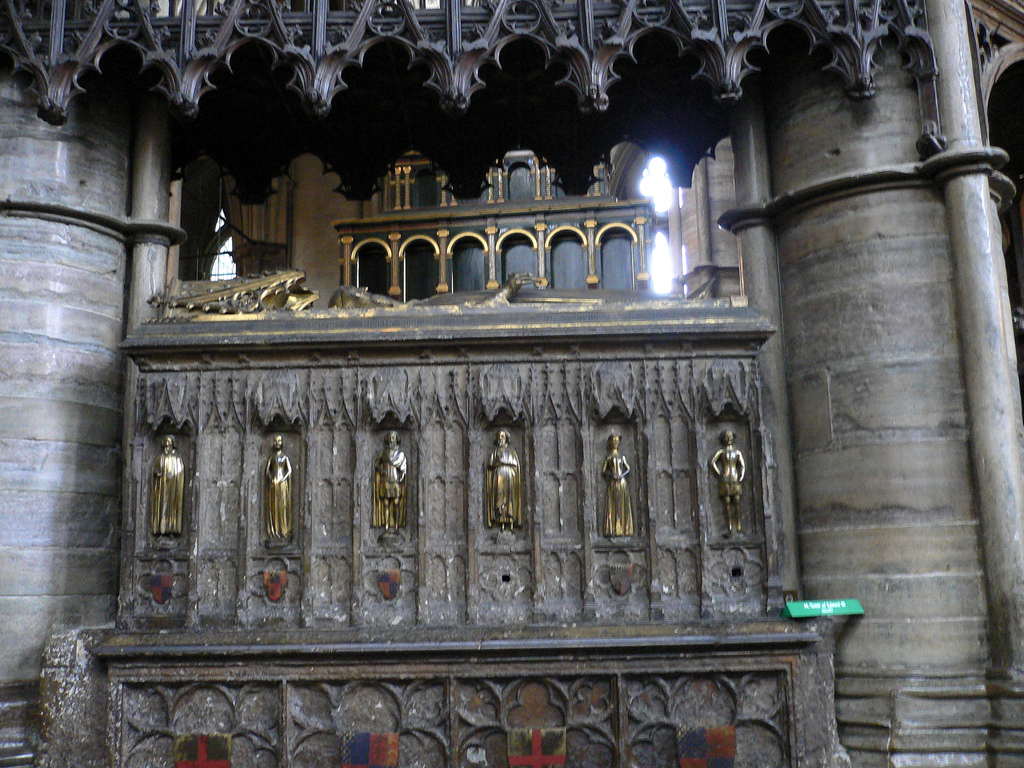
The tomb of Henry III (d. 1272), the first royal burial in the Abbey

Henry III's effigy, above the tomb

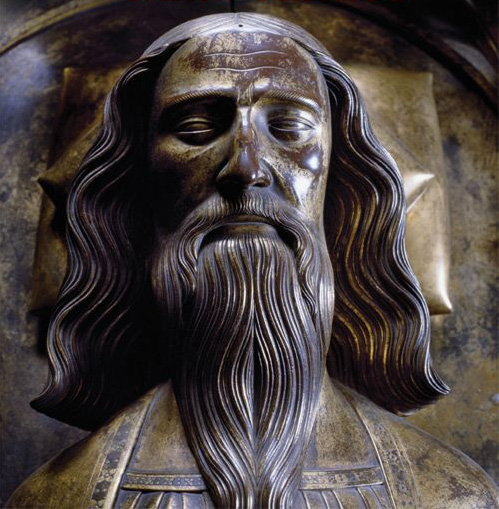
Tomb of Edward III (d. 1377), who started the Hundred Years' War

Edward III again. From this angle, he looks like a Numenorean from the Tolkienverse, as imagined by an art deco sculptor in the Falloutverse.


Tomb of Henry V (d. 1422), who if the English are to be believed, won the Battle of Agincourt with two archers and a cheese knife. Inscription: "Henry V, hammer of the Gauls, lies here. Henry was put in the urn 1422. Virtue conquers all. The fair Catherine finally joined her husband 1437. Flee idleness"

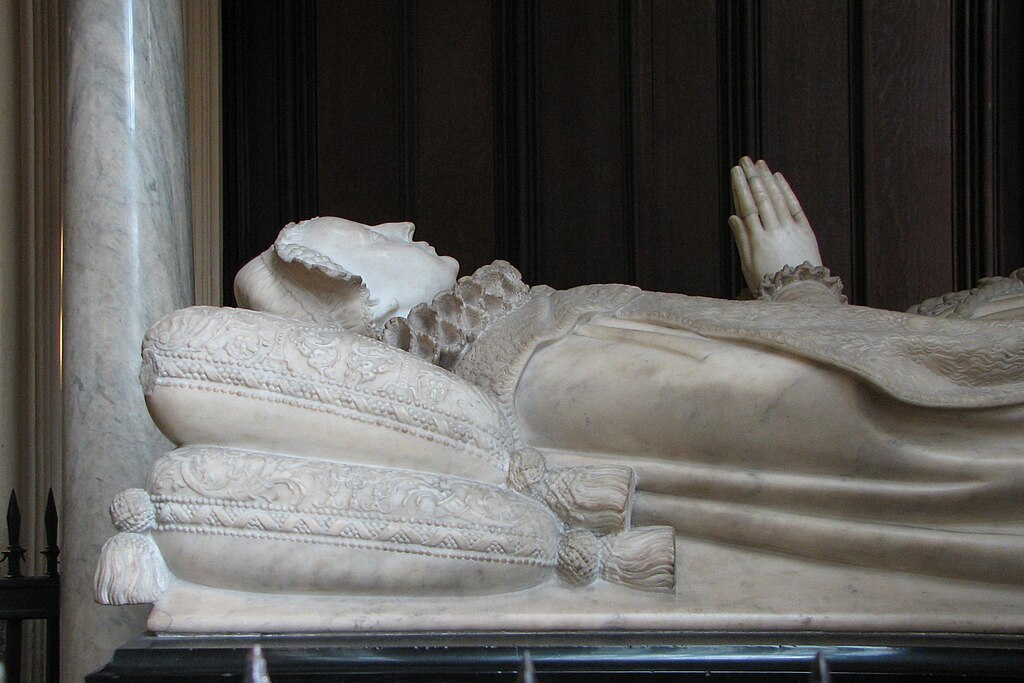
Remains of what are believed to have been the "princes in the Tower". The Latin inscription says: “Here lie the relics of Edward V, King of England, and Richard, Duke of York. These brothers being confined in the Tower of London, and there stifled with pillows, were privately and meanly buried, by the order of their perfidious uncle Richard the Usurper; whose bones, long enquired after and wished for, after 191 years in the rubbish of the stairs (those lately leading to the Chapel of the White Tower) were on the 17th day of July 1674, by undoubted proofs discovered, being buried deep in that place. Charles II, a most compassionate prince, pitying their severe fate, ordered these unhappy Princes to be laid amongst the monuments of their predecessors, 1678, in the 30th year of his reign”.

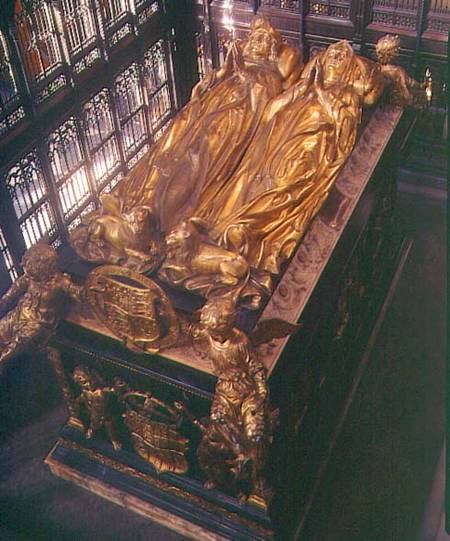
Tomb of Henry VII (d. 1509) and Elizabeth of York. Aside from ending the Wars of the Roses and founding the Tudor dynasty, he's best known for dying filthy rich, hence the grandeur of his tomb. Inscription reads: “Here is situated Henry VII, the glory of all the kings who lived in his time by reason of his intellect, his riches, and the fame of his exploits, to which were added the gifts of bountiful nature, a distinguished brow, an august face, an heroic stature. Joined to him his sweet wife was very pretty, chaste and fruitful. They were parents happy in their offspring, to whom, land of England, you owe Henry VIII”

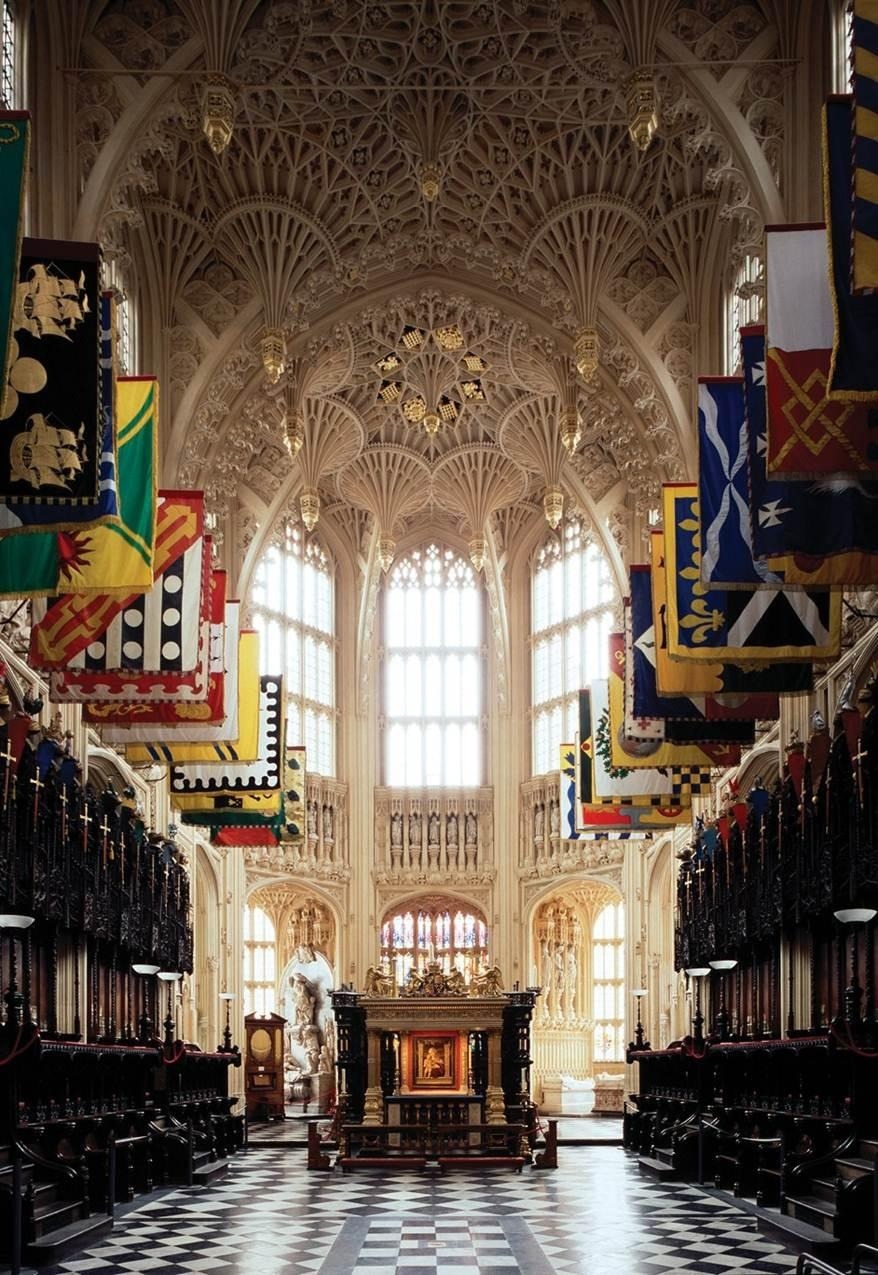
Henry VII's tomb in the midst of the Lady chapel (in the apse of the church). It was the first tomb in the Abbey to be made in the sumptuous Italianate Renaissance style. The sculptor, Torrigiano, was a Florentine who was responsible for giving Michelangelo his broken nose, thanks to a fistfight between the two.


Tomb of Mary I (d. 1558) and Elizabeth I (d. 1603). The monument is all for Elizabeth, who is buried atop her sister, but an inscription acknowledging the two reads: "Partners in throne and grave, here we sleep, Elizabeth and Mary, sisters, in hope of the Resurrection."

Liz's effigy. She has additional inscriptions:
"Sacred to memory: Religion to its primitive purity restored, peace settled, money restored to its just value, domestic rebellion quelled, France relieved when involved with intestine divisions; the Netherlands supported; the Spanish Armada vanquished; Ireland almost lost by rebels, eased by routing the Spaniard; the revenues of both universities much enlarged by a Law of Provisions; and lastly, all England enriched. Elizabeth, a most prudent governor 45 years, a victorious and triumphant Queen, most strictly religious, most happy, by a calm and resigned death at her 70th year left her mortal remains, till by Christ's Word they shall rise to immortality, to be deposited in the Church, by her established and lastly founded. She died the 24th of March, Anno 1602 [NB: this is in the Julian calendar], of her reign the 45th year, of her age the 70th.
To the eternal memory of Elizabeth queen of England, France and Ireland, daughter of King Henry VIII, grand-daughter of King Henry VII, great-grand-daughter to King Edward IV. Mother of her country, a nursing-mother to religion and all liberal sciences, skilled in many languages, adorned with excellent endowments both of body and mind, and excellent for princely virtues beyond her sex. James, king of Great Britain, France and Ireland, hath devoutly and justly erected this monument to her whose virtues and kingdoms he inherits"

In short, the plot to the Elizabeth movies.

Tomb of Mary, Queen of Scots (d. 1587, commonly confused with Elizabeth's sister, Mary Tudor). Though she was executed by Liz, she has a tomb in Westminster Abbey opposite Elizabeth's chapel because her son became the next king, James I. Her inscription is perhaps the longest in the entire Abbey, so I just link it here.

Though my namesake put up several marvelous monuments for his predecessors, people actually forgot where James himself was buried for a couple centuries. 19th century historians dug up several of the graves, including Mary's, until they finally found him in the vault under Henry VII's tomb.

The last king to be buried was George II in 1760. After that, the Abbey caretakers apparently decided enough was enough. Successive kings have usually been around in or around Saint George's Chapel, Windsor Castle.


A few other famous personages

Geoffrey Chaucer (d. 1400). He was originally buried at the Abbey because he was a minister to the government, not a celebrated writer. It was only later that a tradition developed of burying other writers near him in what is now called Poets' Corner. Inscription: “Of old the bard who struck the noblest strains/Great Geoffrey Chaucer, now this tomb retains./If for the period of his life you call,/the signs are under that will note you all."


George Frederic Handel (d. 1759).


The entire floor is covered with tombs and memorial plaques. Dickens requested a small funeral, so this is all that marks him.

This one is built against the choir screen here, which is sort of like a rood screen or sanctuary gate. On the left is one to Sir Isaac Newton. I believe the Gothic revival screen was added by Edward Blore in the Victorian age. The dude on the right, by the way, is James Stanhope, who was sort of a prime minister under George I before that office formally existed.

Another favorite monument, and the most metal of all: the one to Lady Elizabeth Nightingale (d. 1731). Death emerges from his prison to claim the life of Elizabeth, while her husband Joseph desperately tries to fend him off. History would probably have forgotten this otherwise obscure couple if not for this mesmerizing sculpture.


And finally, no tour would be complete without the Tomb of the Unknown Warrior. Simple, but the inscription touched me most of all.

As with all funerary inscriptions, "for the sacred cause of justice" is a bit of a stretch for the cluster known as World War I, but that, at least, is the sort of death all true warriors aspire to, if it must be done.